Art movements
Compare the ideas, techniques, and historical circumstances that brought artists together.
Choose a topic below, or try an observation game to practice what you read.
Guides in this topic
12 guides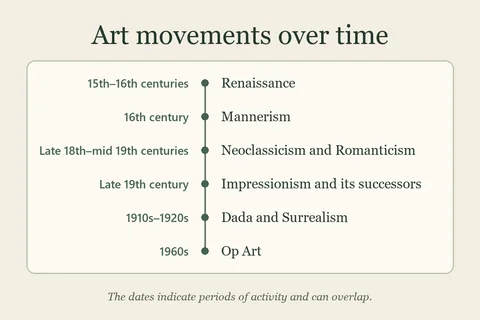 Art Movements ExplainedUse the pocket index to compare how nine movements organize space, gesture, and the viewer’s attention.
 Dada Art MovementFollow a disputed readymade from a 1917 photograph to a 1964 replica, then look for the cuts in a Berlin photomontage.
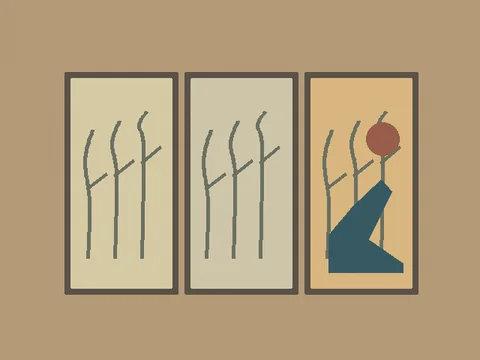 Japanese Art MovementsDistinguish a print trade, two modern painting categories, a postwar artists’ association, and a curator’s term.
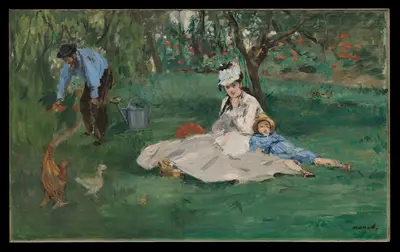 Impressionism Art MovementStart at the 1874 exhibition, then compare a harbor, a sunlit dress, and an off-center indoor portrait.
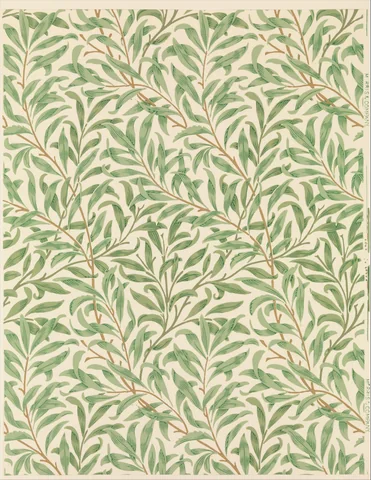 Arts and Crafts MovementRead a Sussex chair, a Morris furnishing fabric, and a Kelmscott book for evidence of how they were made.
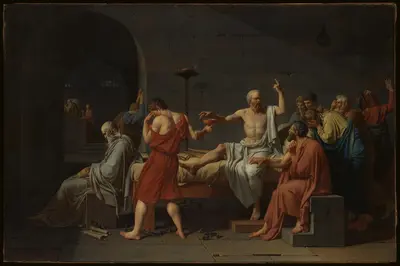 Neoclassical Art MovementTrace David’s oath from the swords to three groups of figures, then compare its floor with Delacroix’s barricade.
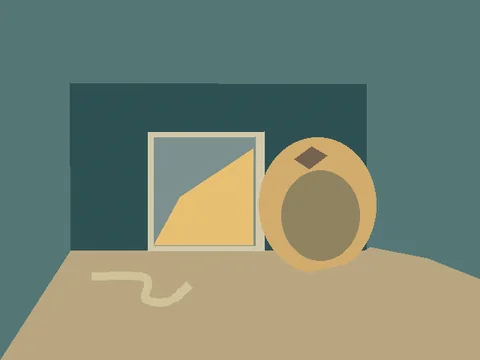 Surrealism Art MovementTest a soft watch, a written sentence below a pipe, and a fur-covered cup against the ordinary rules of use.
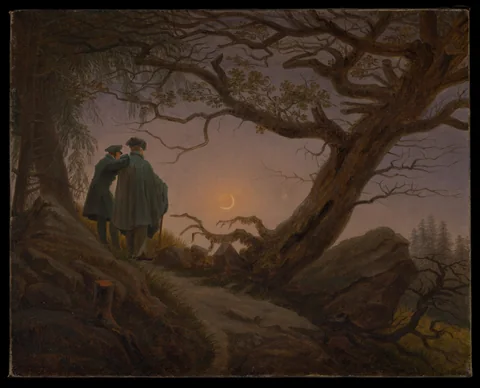 Romanticism Art MovementStand behind Friedrich’s figures, look for a ship in Turner’s storm, and follow the ground beneath a revolutionary crowd.
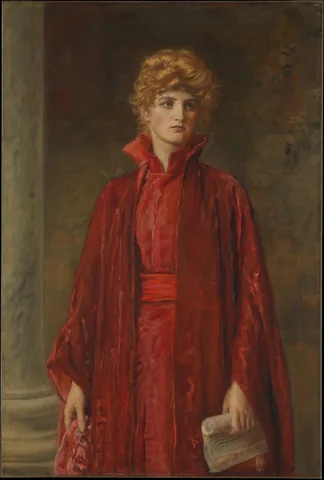 Pre-Raphaelite Art MovementLook for clues in Ophelia’s riverbank and Hunt’s furnished room, then distinguish the Brotherhood from its wider circle.
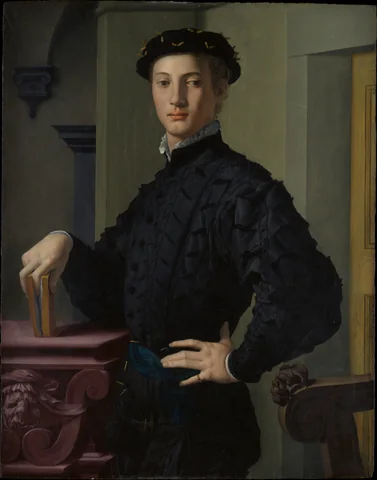 Mannerism Art MovementCompare a column beside a long neck, feet bearing a body, and interlocking hands in a courtly allegory.
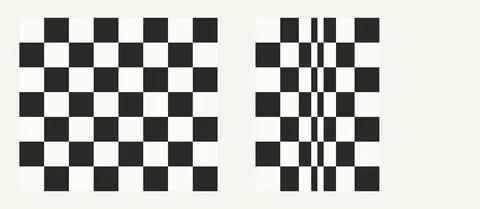 Op Art MovementCompare a regular checkerboard with compressed columns in an original diagram, then trace Riley’s painted fold.
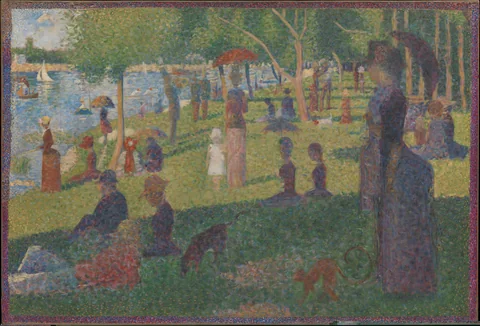 Post-Impressionism Art MovementCompare four actions across Cézanne, Seurat, Van Gogh, and Gauguin: extend an edge, change distance, trace a stroke, and follow a contour.