Impressionism Art Movement
Impressionism art movement: loose brushwork, light, and modern life—how to spot an Impressionist painting.
The Impressionism art movement came into public focus through independent exhibitions beginning in Paris in 1874. Ask first what made those exhibitions possible and then what a particular painting looks like. The exhibitors shared an alternative to the official Salon, yet their subjects, backgrounds, and methods varied considerably. The overview of art movements distinguishes a historical group from a checklist of visual traits. A misty harbor, a ballet rehearsal, and a woman near a cradle can all belong to this conversation.
An exhibition gave different artists a public identity
On April 15, 1874, the first independent exhibition opened in Nadar’s former studio in Paris. Claude Monet showed Impression, Sunrise, his painting of Le Havre harbor. Critic Louis Leroy used its title in a satirical review. The name stuck. Critics could treat visible strokes and apparently unfinished passages as provocations. For a viewer, the historic title is also an invitation to see what a few marks can establish about water, smoke, distance, and an early hour.
There were eight independent exhibitions between 1874 and 1886, with changing participants. An artist's relation to Impressionism cannot always be settled simply by asking whether one painting looks loose or brightly colored. Check an exhibition history or a catalog entry. Édouard Manet, for example, had important connections with the artists and their debates but did not exhibit in these eight shows. That distinction matters when describing the group itself as opposed to its wider circle of colleagues and influences.
Look at a shadow before naming the style
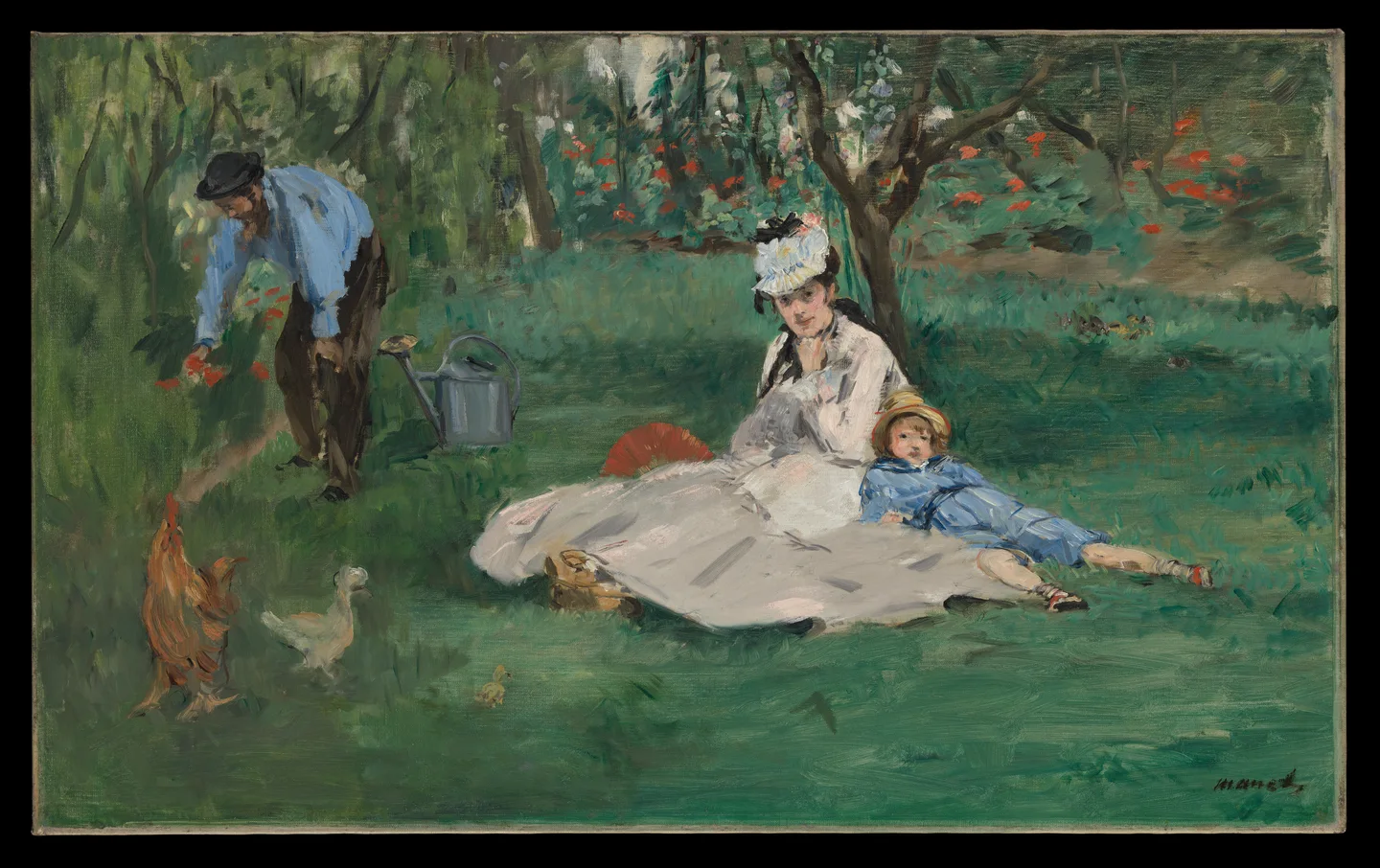
Start with Édouard Manet's The Monet Family in Their Garden at Argenteuil. Camille Monet's pale dress spreads across the grass. In the shade, parts of the fabric take on cooler tones, yet you still read the garment as white. Farther left, Claude Monet bends over his garden. Look away from the faces and try finding both adults again just by following the areas of light and shade. A patch of pale paint can describe the weight of a skirt in one part of the picture and a gap in foliage in another. The effect depends on the colors that touch it.
In Monet's series paintings, a repeated building, field, or water garden makes differences of light easier to isolate. Some canvases underwent extensive work after the outdoor session. An appearance of quick perception and the time required to produce a finished canvas measure different things. Look for where an apparently casual stroke aligns with a firm underlying shape. A bridge span, roof truss, or architectural opening can give structure to a surface that first seems almost entirely atmospheric. Compare the harbor with Turner’s painted steam tug. The darker boat helps you locate the waterline even where sky and water approach the same color.
Modern life happens indoors as well
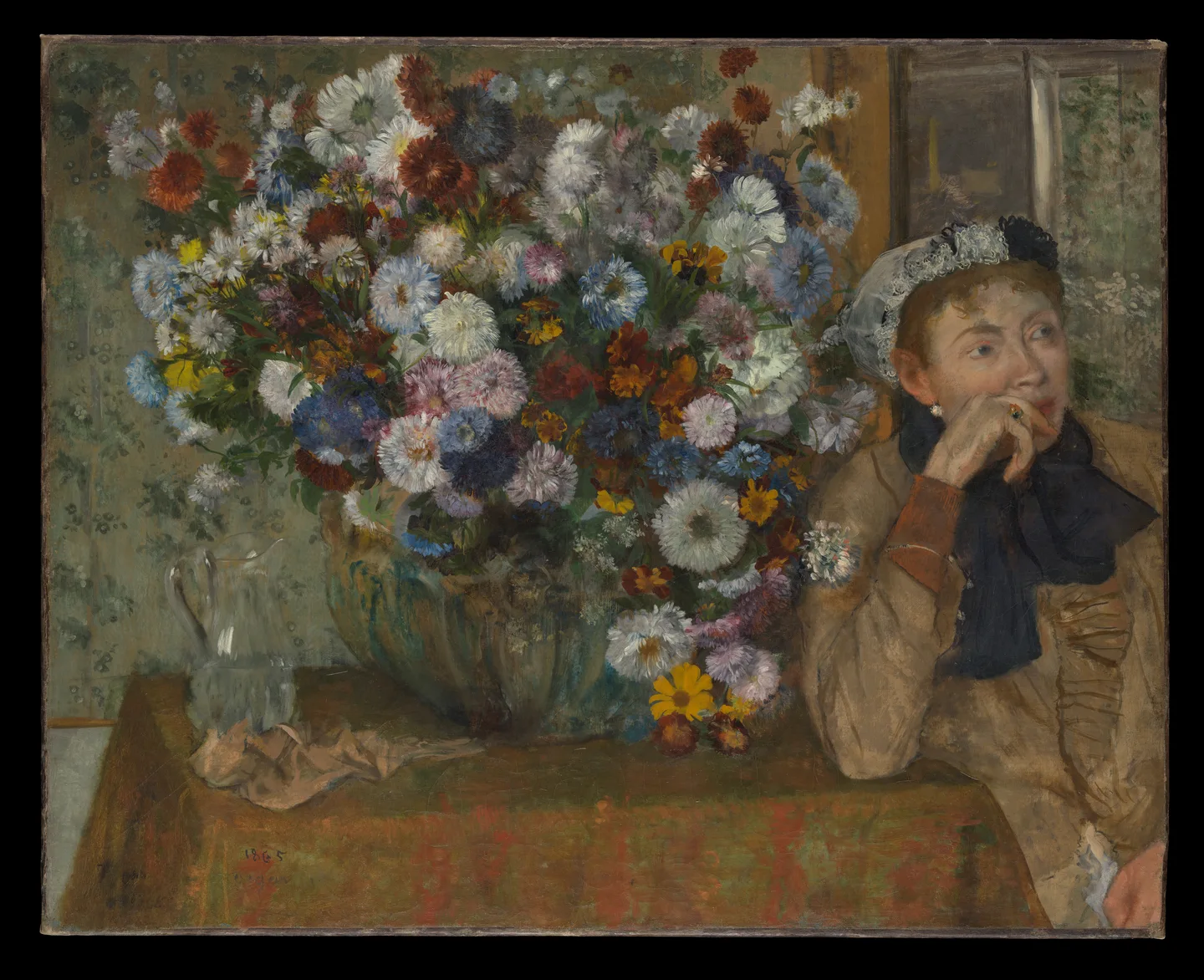
Degas's A Woman Seated beside a Vase of Flowers poses a small puzzle. The bouquet gets much of the canvas, while the woman's face sits close to the right edge. Crop the flowers out with a piece of paper. Her head on her hand starts to read like the center of a conventional portrait. Uncover the bouquet and see how far the two areas compete for your attention. The Met dates the work to 1865, nine years before the first independent exhibition. It offers an early example of Degas experimenting with the off-center placement he later used in pictures of rehearsals, cafés and racecourses.
Berthe Morisot's The Cradle shows a seated woman gazing at a sleeping infant through or across a light veil. The fabric both separates mother and child and gives the picture a large translucent shape. A view of leisure by a river, a station interior, and a room of domestic care represent different kinds of access to modern life. Differences in gender, class, occupation, and social convention affected where people could go, whom they could observe, and what was possible to show publicly.
Test a work against its neighbors
These three works have three different relationships to the label. Manet painted the Monet family in 1874, the year of the first exhibition, though he did not exhibit with the group. Degas, who did exhibit, painted his flower-filled interior before the shows began. His Three Jockeys comes from around 1900, after the series of exhibitions had ended. Look along the riders' backs and the sides of their horses. Colored pastel dragged over tracing paper gives an animal's flank a different texture from Manet's oil paint on grass. The dates, artists and materials give you a more useful comparison than sorting the three into a “loose brushwork” pile.
Explore the Post-Impressionism guide to see what happened when artists took broken color, modern subjects, or independent exhibition in different directions. The term Post-Impressionism groups several such paths retrospectively. In the art history collection, look for the date a term was coined as well as the dates of the pictures to which it now applies.
Frequently asked questions
Does every Impressionist painting have to be painted outdoors?
Outdoor observation mattered to several artists, but their work also involved studios, models, preparatory studies, and revision. Interiors and rehearsals appear throughout the movement's exhibition history. Examine a particular painting's documented process before drawing conclusions from the subject.
How do I check whether an artist exhibited with the group?
Look for an exhibition checklist or the exhibition history in the museum’s record. Match the year and the work as well as the artist. Degas exhibited with the group, but his 1865 flower painting predates the first show.
Put the harbor beside the garden
Find a reflection in Monet’s harbor and a fold of Camille’s pale dress in Manet’s garden. Cover the surrounding colors. Which patch still looks like water or cloth on its own?