Pre-Raphaelite Art Movement
Pre-Raphaelite art movement: bright color, detail, and medieval stories—how to spot a Pre-Raphaelite work.
The Pre-Raphaelite art movement began with a small brotherhood formed in Britain in 1848. Its artists drew on early Italian painting, intense observation, biblical and literary subjects, and a desire to reform the conventions they encountered in academic art. The guide to art movements explains why a group's name does not automatically describe every work made around it. For the Pre-Raphaelites, a tiny flower can belong to a measured study of nature, a literary story, and a conspicuously crafted surface at the same time.
A name signals an argument with an artistic education
John Everett Millais, William Holman Hunt, and Dante Gabriel Rossetti were among the founders of the Pre-Raphaelite Brotherhood. The name pointed to an admiration for qualities associated with art before Raphael and to dissatisfaction with academic formulas that later painters had inherited. Their interests included directness, luminous color, close attention to nature, and emotionally or morally charged subjects. The aims did not oblige them to reproduce the appearance of every earlier medieval or Renaissance object they admired.
Millais's Isabella (1848–49) takes a meal from Keats's poem and turns it into a study of incompatible gestures. The diners sit around a table set with fine dishes. One man stretches out a leg to kick a dog under the table while Isabella inclines toward Lorenzo, who offers her a cut orange. Try reading the scene once above the tabletop and once below it. Courtesy and aggression share a meal, and the sharp finish given to small objects helps you discover the contradiction before you know how the poem ends.
Millais gives Ophelia a landscape with its own claims
Millais's Ophelia shows the figure from Shakespeare's Hamlet floating in water amid densely described plants. The flowers bring literary and symbolic associations, but the banks also give evidence of sustained observation outdoors. Pick one plant at the water's edge and follow its movement toward the figure. The picture keeps the bank visually active even though the narrative draws viewers toward the face and open hands. A reader familiar with the play may approach those two areas in a different order from a viewer meeting Ophelia for the first time.
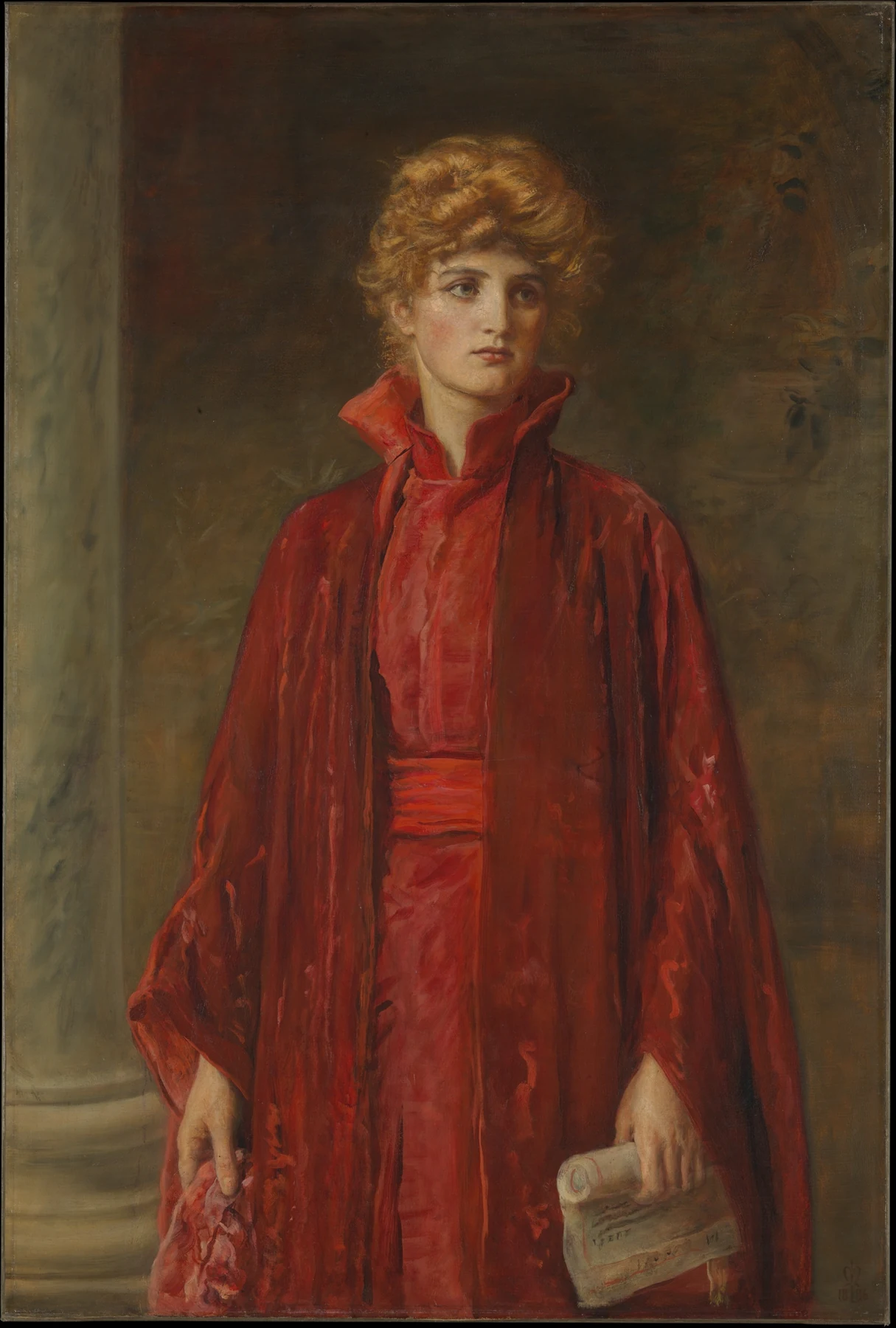
In Portia, Millais painted another Shakespearean figure later in his career. Follow the outline of the robe from the shoulder to the sleeve and the hand holding a sheet of paper. The standing figure and her costume can establish a role on an almost empty stage. Return to Ophelia and cover the bank. How much of her story can you still read from her floating dress and open hands?
Millais painted the riverbank beside the Hogsmill in Surrey and posed Elizabeth Siddal for Ophelia indoors in a bath. That order explains a striking effect. The water and bank seem able to continue long after the figure has floated past. Gertrude describes the drowning in Shakespeare's play, away from the audience's sight. Millais gives the missing scene a place and a season, down to individual stems touching the water. Compare the flowers with those in famous flower paintings. Here the plants can reward identification even as the current carries some of them out of reach. Compare the visible plants with the obscured terrain in Friedrich’s sea of fog. One landscape invites you to name what grows there, while the other puts that evidence out of reach.
Hunt makes an ordinary room tell a second story
In Hunt's The Awakening Conscience, a young woman rises from a man's lap in a carefully furnished interior. Ask what first tells you she is rising. The bend of the body, the placement of the hands, and the relation between the figures all contribute. Bright objects surround the couple, and the mirror behind them opens an apparent view toward a garden. The room supplies information about money, social arrangements, confinement, and the possibility of another kind of life.
There is a second small drama on the floor at the left in The Awakening Conscience. A cat has caught a bird, and the bird is struggling. You can see the parallel Hunt invites between that pair and the couple, but the woman has a choice the bird cannot exercise. Then follow the woman's gaze. The light from the garden reaches her from outside the painted field, while the mirror shows the viewer the greenery behind us. The cat, the escaping bird and the reflected opening offer three different ways to think about captivity in a room filled with expensive possessions.
Trace the circle beyond the original brotherhood
Rossetti increasingly pursued richly colored heads and figures surrounded by textiles, flowers, and objects. Burne-Jones developed elongated figures, elaborate narratives, and designs across media. Siddal also drew, painted, and wrote poetry. The term Pre-Raphaelite is often used for this wider circle as well as the original members. A work's date and an artist's actual involvement with the group help distinguish the narrow organizational history from the wider influence.
Links with Morris and colleagues connect the story to the Arts and Crafts movement, especially in stained glass, textiles, books, and interiors. The art history guides show how a group identified with elaborate narrative painting could also affect the design of ordinary rooms and printed pages.
Frequently asked questions
Were all painters called Pre-Raphaelites members of the Brotherhood?
No. The original organization had a small, identifiable membership. Later artists and designers shared interests, collaborated with members, or developed related approaches without belonging to the initial group. Check dates and documented relationships when using the broader term.
Why does a background sometimes look almost as sharp as a figure?
Sustained study of separate motifs and a commitment to detailed description can give objects across the picture unusual clarity. The result may direct attention through a scene differently from selective focus in a photograph. Locate the sharpest edges and consider whether color, scale, or gesture still establishes a principal action.
Follow a clue beyond the figure
Choose a flower at the edge of Ophelia’s dress and the reflected garden in The Awakening Conscience. Imagine covering each one. What part of the story would the figure’s pose still tell you?