What to Check Before Taking an Art Appreciation Class
Thinking about taking an art appreciation class? Check the weekly workload, discussion format, assignments, and costs before you enroll.
Will this art appreciation class fit the hours you have outside work or school? Before enrolling, put one week from the syllabus on your calendar. Count the time you need to see the images, join a discussion, get to a gallery, and finish the writing. For a rehearsal of what happens in the room, follow the week in an art appreciation class. Here you will use the timetable and the assessment rules to compare two sections before choosing one.
Sample Tuesday on a student calendar
Take this sample Tuesday as a worksheet. A seventy-five-minute seminar includes a projection of ten images and a discussion. At home you need twenty minutes to examine one image, half an hour to read, and forty minutes to draft a response. The example adds up to two hours and forty-five minutes, and only seventy-five minutes appear on the timetable. Substitute your reading pace and your section's actual tasks. Now move the exercise to a museum half an hour away. The trip alone adds an hour even if the writing stays identical.
Read the verbs beside each date. Watching a lecture, posting a paragraph, responding to classmates, and uploading a comparative essay require different stretches of uninterrupted time. Check whether late work receives feedback and whether missed gallery visits have an alternative. If the information is missing, a short message naming the exact assignment and date can get a much clearer answer than asking whether the course is easy. The introduction to art appreciation describes the underlying practice of turning observations into judgments.
Find out how you will see the objects
A screen-based class may provide high-resolution files, a course reader, museum links, or short videos showing an object from several sides. Look for captions, descriptions, zoom controls, and dimensions that help you understand scale. If a painting appears on only one lecture slide, you may need access to the slide afterward to make a careful comparison. If a course includes sound works or video, check how transcripts and captions are provided.
For an in-person class, ask where the meetings happen. A gallery session can involve standing for a long time in changing light. A studio demonstration can involve tools or materials with specific handling requirements. Students who use accommodations can contact the relevant office about their own circumstances and how assignments will be delivered. A timed looking game can give you a sample of visual recall practice. A course focused on extended observation may use a much slower pace throughout the term. To judge the level of reading, try the short portrait exercise from an art appreciation course with and without the museum label.
Try a first-day exercise before registering
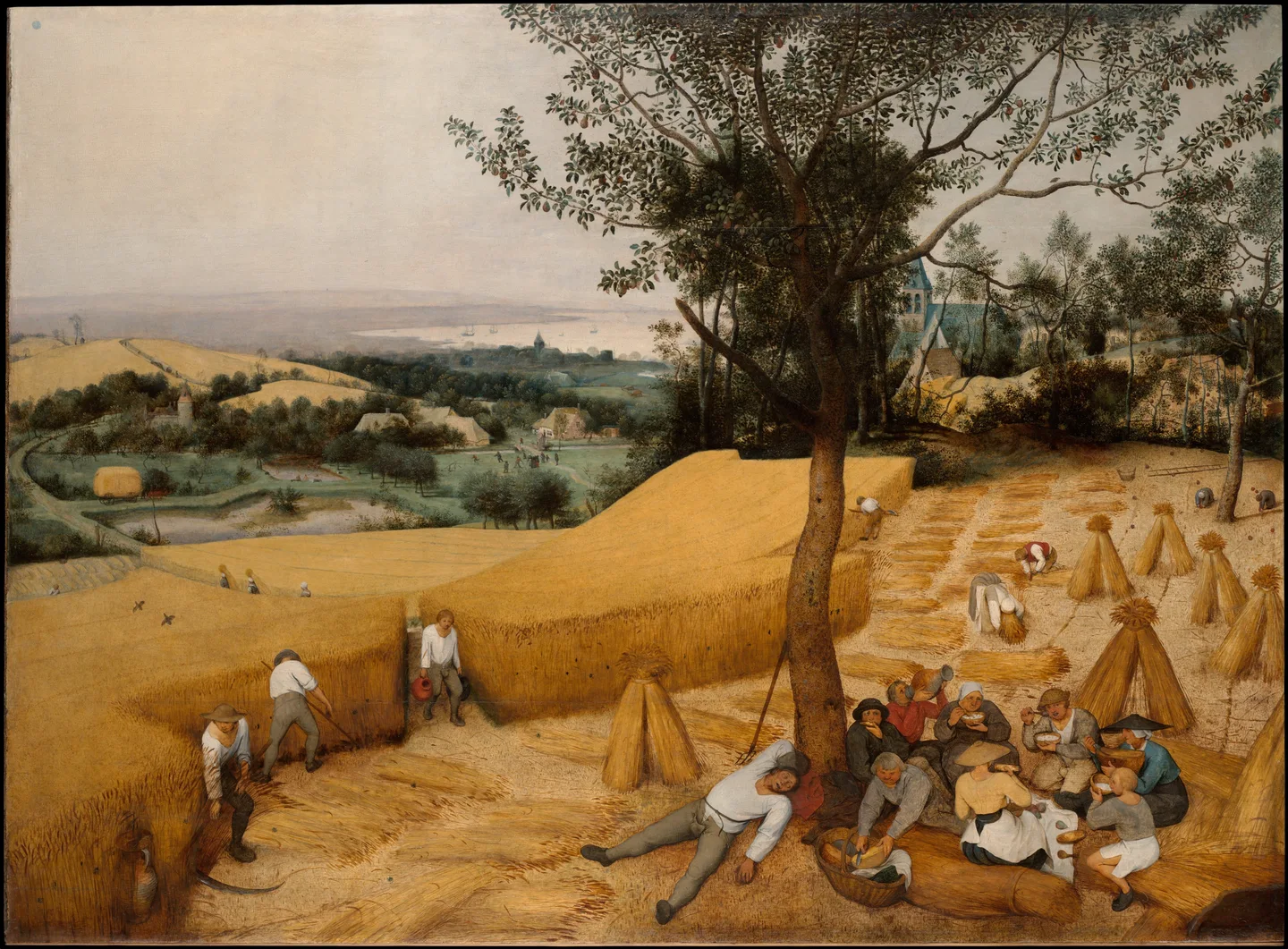
Try The Harvesters by Pieter Bruegel the Elder as an admissions-free sample lesson. On the right, some people gather beside a tree to eat. Elsewhere others continue to cut or carry grain. In sixty seconds write two sentences, one recording their different activities and one explaining how the tree and the broad yellow field direct you to both. “It looks hot” might be your first response. Can you identify what the resting bodies or the handling of shade made you notice?
Now try two kinds of assessment on Bruegel. An identification quiz might give you the title The Harvesters and ask for the painter's name. A discussion prompt might ask how the view changes if you cover the people eating. The first calls on recall, the second on a new observation, and a course might grade both. Take an art history identification quiz as a sample, then check the syllabus for how often timed identification counts toward the final grade.
Read the assessment and cost information together
A catalog may list only tuition, while a syllabus identifies a required book, exhibition ticket, transport cost, or materials for an assignment. See whether the library carries the text and whether a museum has free hours that fit the schedule. If a course requires a digital platform, find out what access period the fee covers. For a graded presentation, determine whether the work is delivered live, recorded, individual, or shared with a group.
Suppose one section offers Tuesday museum visits and a final paper, while another offers asynchronous lectures and a short quiz every Friday. Work backward from your own calendar. How many Tuesdays can you attend? Could you reach the museum before it closes? Can you reliably meet a Friday deadline? Then try one of the details and differences exercises on the device you would actually use for the course. A detail that disappears on your phone may be easy to read on a library monitor.
Frequently asked questions
Do I need an art portfolio to take an introductory class?
Most general introductory appreciation classes emphasize observation and discussion. Check the listed prerequisites for your section. Studio requirements, credit restrictions, language expectations, and enrollment policies vary among programs, even when the classes share almost identical names.
What should I check if my work shifts change each week?
Check which meetings require live attendance and when the weekly discussion closes. If a museum visit is required, ask which days and times count and whether a written alternative is available. An asynchronous lecture can still come with a discussion deadline that falls during your shift.
Before you enroll
Write down the weekly hours, including travel. Check which discussions require attendance, which assignments count toward the grade, how you can reopen the images, and how much tickets, books, or materials will cost.