What Is Art Appreciation? A Practical Guide
What is art appreciation? Learn the difference between looking and seeing, ask better questions, and try simple looking exercises.
What is art appreciation? It is the practice of giving an artwork enough attention to describe what it does, consider the circumstances in which someone made it, and explain your response. You can do this with a folding screen, a painted bowl, or a painting that leaves you cold. If you want to try it with one image open, how to read a painting walks through the first observations. Here the question is what changes when you spend that attention and how to recognize an answer worth keeping.
An opinion you can take apart
Suppose two visitors pause before Bruegel's Hunters in the Snow in Vienna. One calls the scene cheerful and points to skaters in the distance. The other points to the hunters returning downhill with their dogs, then notices how little game they appear to be carrying. Put a sheet of paper over the skaters and look at the hunters. Now cover the front slope and look at the ice. Neither visitor invented a different winter. Each gave a different part of this particular winter the leading role.
Ask a more difficult question. Would the painting feel as playful if the skaters occupied the foreground, large enough for us to see their effort? Would the tired dogs seem as weary against a field of warm color? Appreciating the picture involves examining the choices that made those first descriptions possible. You can change your mind about the image while keeping a fairly accurate record of your first response. In a notebook, save the first sentence and add the second below it.
Give a familiar object its circumstances back
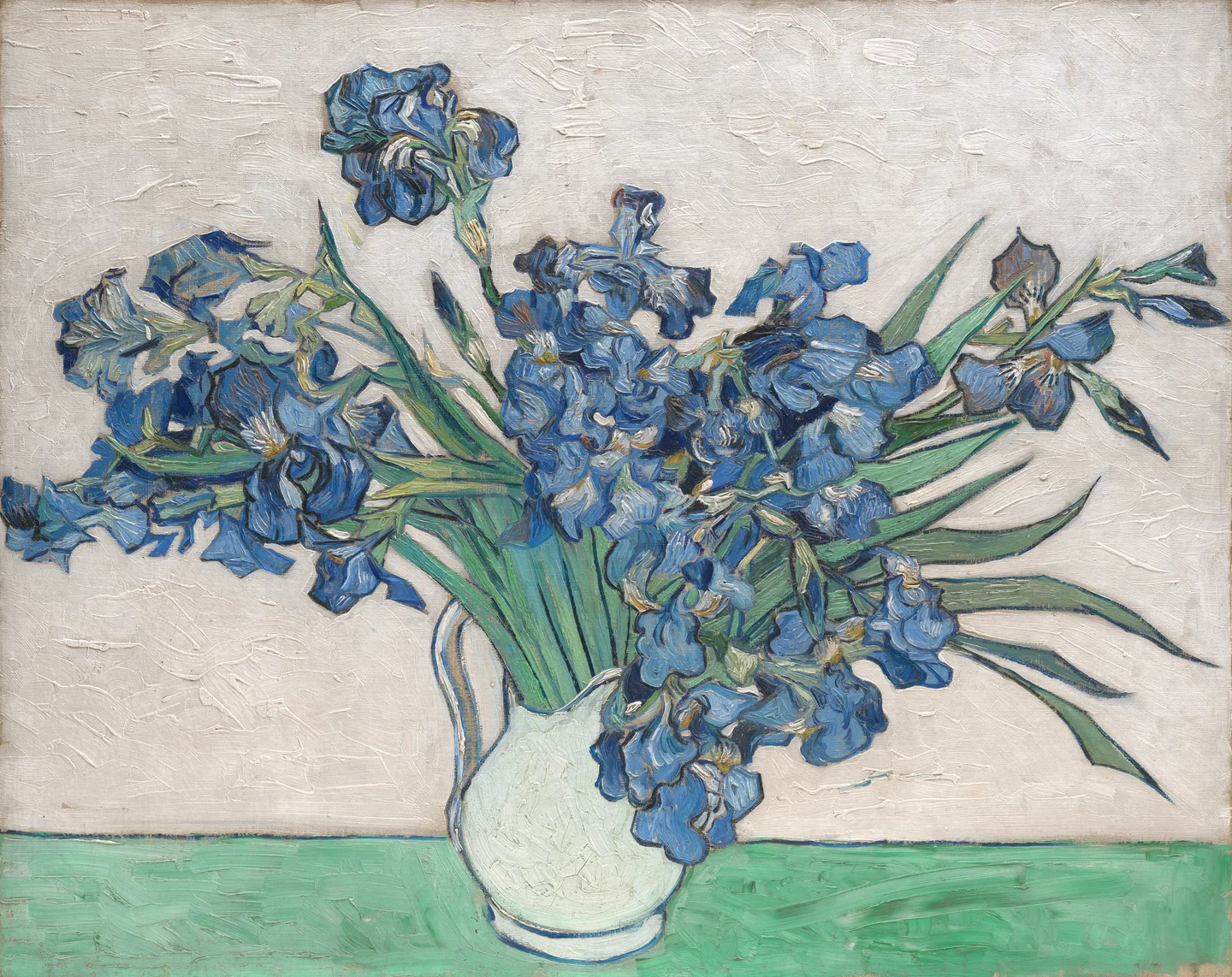
Van Gogh's Irises shows flowers gathered in a vase. Ogata Kōrin used the same flower for a pair of six-panel folding screens. A photograph lets you compare two clumps of blue a long way apart. Imagine standing beside the hinged original with one panel angled toward a lamp and the next turned away. The flowers retain their shapes, but the gold intervals brighten and darken as you walk. Calling that background “plain yellow” describes one reproduction. “Gold catches light between the clumps” gives you something you could test in the room.
The same habit applies to a small painted object. A manuscript page sits in a sequence that a reader once turned by hand. A wall painting meets the viewer's eye from a particular height. A portrait made to travel carries a different social promise from a portrait hung at the end of a formal hall. When the original setting is uncertain, a question can be more honest and more interesting than a confident story. Which details would still be legible across a room? Which ones require a close encounter?
Listen for a disagreement you can use
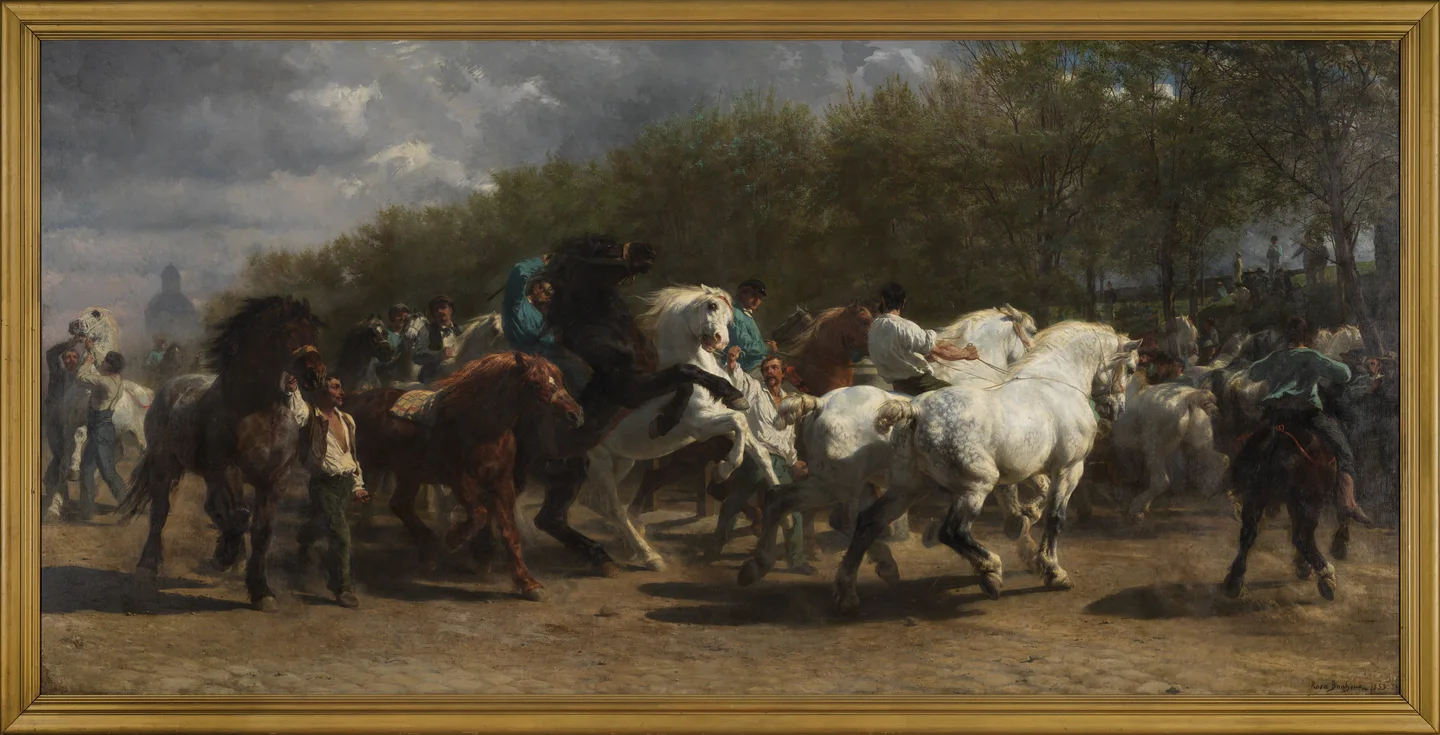
With Bonheur’s The Horse Fair, give each person a verb for what the group of horses is doing. A viewer who says “parading” will probably follow the bodies along the road. Someone who says “resisting” can find the rearing horse and follow the handler below it. Trace each route back to its starting point. The two verbs describe tensions inside the same procession, and the handler has just become a more important figure for a viewer who initially saw only horses.
Use the Spot the Difference comparison game to practice describing a change precisely. A partner should be able to locate the change from your words alone. Then try an analogous task with two different paintings of the same subject. Decide which features their makers repeated and which they altered. The methods in seven steps for appreciating art give a group a simple order for this longer conversation.
Test the words you use
Beautiful, strange, and realistic can each begin an inquiry. Put an observation after the word. A face might seem realistic because a cheek casts a convincing shadow, even though the head is much too large for the body. A patterned sleeve might seem strange because the marks continue across folds without changing direction. Replace a general adjective with a description another person could verify.
Context can also expose the limits of a word. A painting of repeated squares may look simple in a small reproduction. In the gallery, faint changes of paint thickness, the scale of the surface, and the space between your body and the wall can alter that judgment. The guide to famous abstract paintings offers works for testing the vocabulary of edges, intervals, and scale. Return to the details and differences collection for subjects where a seemingly minor observation becomes the question that carries the discussion.
Frequently asked questions
Can I appreciate a work I actively dislike?
Yes. Name the source of your resistance as precisely as possible. A crowded foreground might feel oppressive. Once you identify the unusually narrow gaps between figures, you can explain how the painting produces that sensation. Your preference and your account of the painter's decisions answer different questions and can develop independently.
How much history should I learn before visiting a museum?
Start with a few minutes in front of one object. Read its label after you have located a question, then seek a specific piece of history that could change your answer. A commission, a material's cost, or a room's former use can illuminate more than a long list of dates memorized before the visit.
Exchange two verbs
Choose a horse in Bonheur’s procession and write one verb for its movement. Ask a partner to choose another. Trace the line of a rein or the bend of a leg that could support each reading.