How to Read a Painting: A Beginner's Guide
Learn how to read a painting step by step — subject, light, gesture, symbols, and labels — then practice with free art games.
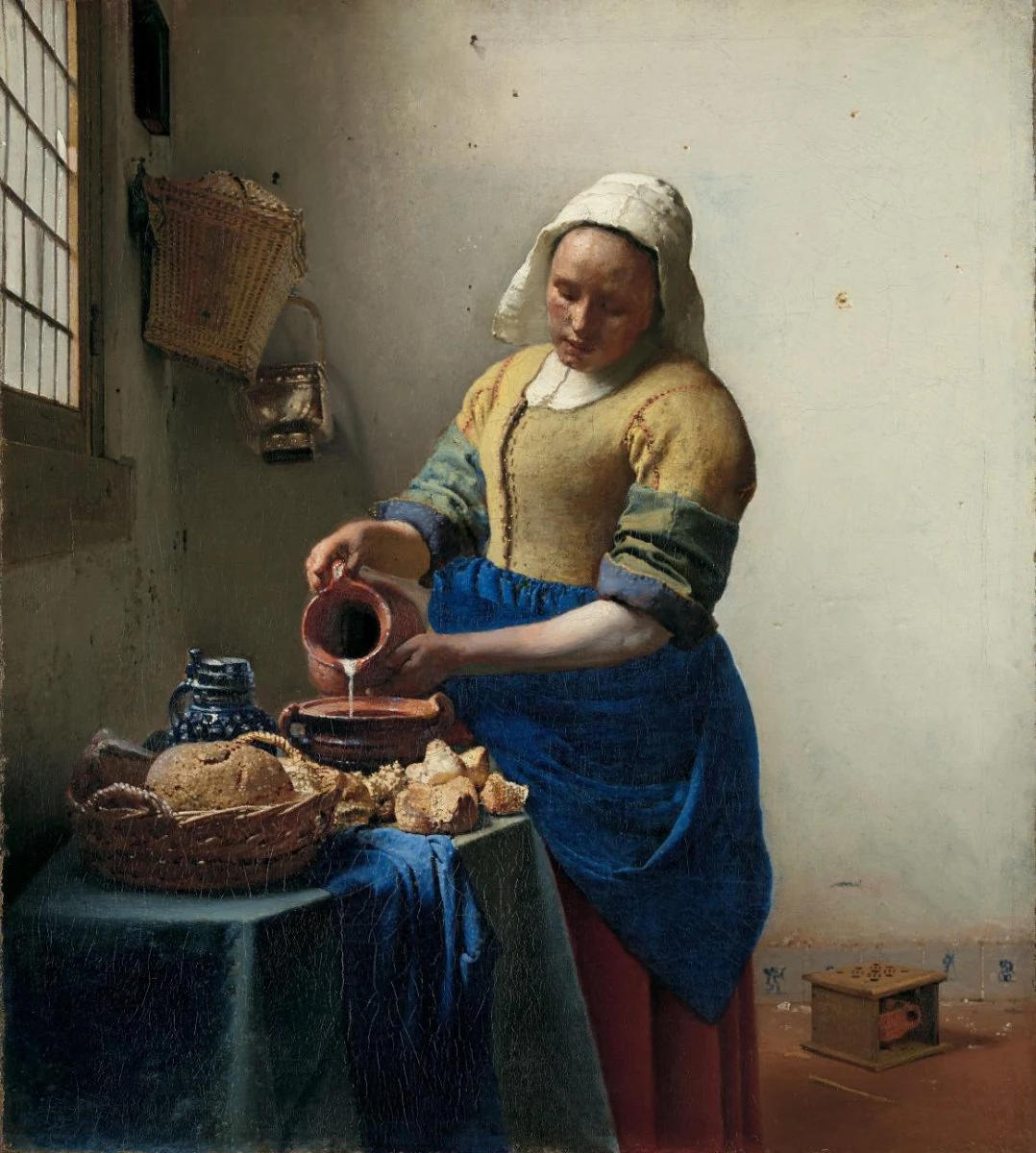
The jug is tipped. The milk is still falling. You could spend a minute with Vermeer's The Milkmaid at the Rijksmuseum deciding how much has happened and how much is about to happen. If you want to learn how to read a painting, begin with a question like that, small enough to settle by looking. The wider practice of art appreciation includes what comes next. Who had the opportunity to see a household worker with this much attention? What did Vermeer remove to give her hands that space?
Make an inventory before deciding on a story
Imagine describing The Milkmaid over the telephone. A woman stands at a table. A narrow stream runs from her jug into a vessel. Bread sits near the table's front edge. A window occupies the wall on the left. These four observations give your listener enough information to sketch the scene. Saying only that the woman looks peaceful gives your listener almost nothing to draw. A description gains force when it specifies where one thing sits in relation to another.
Now put an interpretation next to one observation. The stream is exceptionally narrow and the woman's eyes turn downward, so her task seems to require concentration. Someone else might describe the scene as quiet because so much pale wall surrounds a single figure. Those readings can coexist. A surprising reading earns its place by explaining a detail that a more familiar account leaves out. For a quick trial, use Ten-Second Look to test your visual memory, then see which relationships you retained after the image disappears.
Follow an edge through the picture
Composition means the arrangement of things inside the frame. Pick an edge you could trace with your finger in the air. Follow the sloping side of the jug toward the stream. Change direction and follow the woman's sleeve toward her bent arm. Each route connects a tool with the body that controls it. Follow a completely different edge, such as the straight vertical of the window frame, and the figure's curves become easier to see.
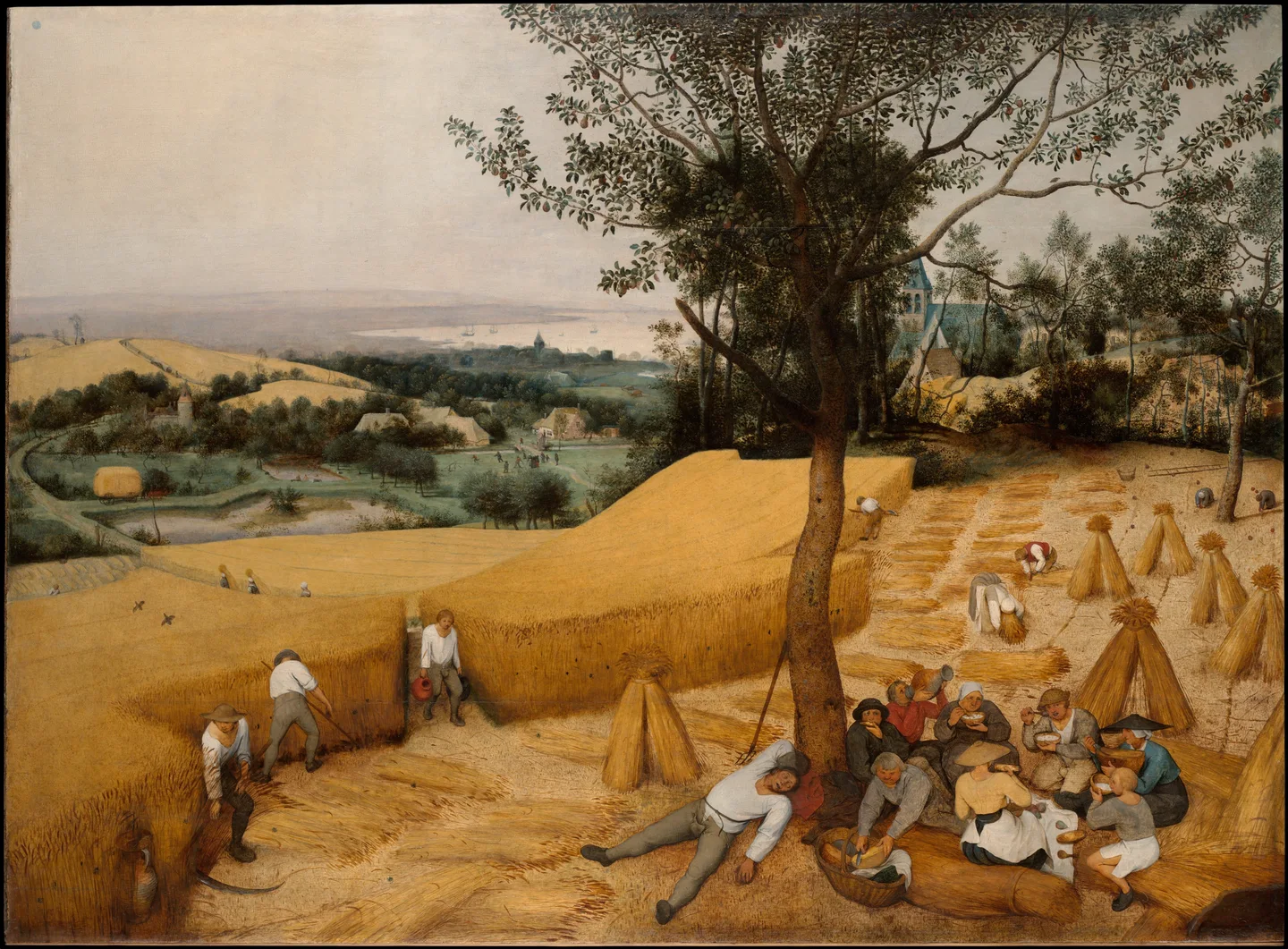
Look for an edge that divides two activities in Bruegel’s The Harvesters. The trunk rises beside the group eating in its shade. Track its left edge down toward the cut stalks, then look past it to the workers carrying sheaves across the field. Over the telephone, could you place the meal and the work in relation to that single trunk?
Light can build a second arrangement on top of the first. In The Milkmaid, daylight from the left picks out small highlights on the bread. The wall gives the viewer a broad area of relative rest. Imagine cropping the wall away until the woman's head almost touches the top. Her bent posture would still be legible, but the air around that posture would shrink. You have just tested a claim about composition by changing a single condition in your imagination.
Give gestures and objects a second reading
With several people present, trace the path from one person's gaze to another person's hand. In Velázquez's Las Meninas, people look in different directions, and a painter stands beside the back of a large canvas. What he can see and what we can see are two different sets of information. The small mirror on the rear wall introduces another pair of faces. A floor plan showing each figure and a few arrows makes the puzzle easier to discuss.
The little container low on the right of The Milkmaid is a foot warmer. If you mistook it for a box of household supplies, identifying it changes what you can ask about the room. Which details invite you to imagine the woman's working conditions? Objects can also carry associations specific to their period. A lily beside the Virgin in an Annunciation has a longer devotional history than a lily glimpsed beyond a garden wall. The examples in famous flower paintings follow those changes of setting.
Read the label and revise one sentence
Look for the medium, dimensions, date, maker, and original purpose. An altarpiece made for a distant congregation asks a figure to communicate across a room. A portrait miniature held close to the body asks for a different kind of attention. Reproductions often give both objects the same dimensions on your screen. Check the actual measurements and mark the height against a door or a sheet of paper. Scale can change your understanding before you read any interpretation.
Here the museum's research really does change a sentence. Write “Vermeer left the wall empty so I can follow the pour.” In its 2022 account of the scans, the Rijksmuseum identifies black strokes behind the woman’s head as a jug holder and jugs that Vermeer sketched and later painted over. Revise the verb to “emptied.” You still see exactly the same wall. Now the quiet looks like a choice made during the painting's development, and you have a reason for that inference beyond your own feeling about the room. Try a before-and-after note in the details and differences guides.
Frequently asked questions
How do I start with a painting that has no recognizable subject?
Choose two areas whose edges behave differently. Describe their size, color, spacing, and direction. A hard diagonal may press against a field of hazy color. That relationship gives you a concrete starting point even if you never find a recognizable object. The examples in reading a modern painting develop this approach through individual works.
Is my first impression worth keeping?
Yes. Write it down with the detail that prompted it and return to it after a longer look. If the room initially felt empty, count the objects competing for your attention. You may discover that the impression came from their placement near the edges or the uninterrupted space between them.
Describe the pour over the telephone
Close the image and tell someone where the jug, the stream, and the receiving vessel sit. Ask them to sketch the three. Reopen the painting and correct the one relationship your words left unclear.