How to Appreciate Art: 7 Simple Steps
How to appreciate art in seven simple steps: slow down, name what you see, follow the light, read gestures, and check the label.
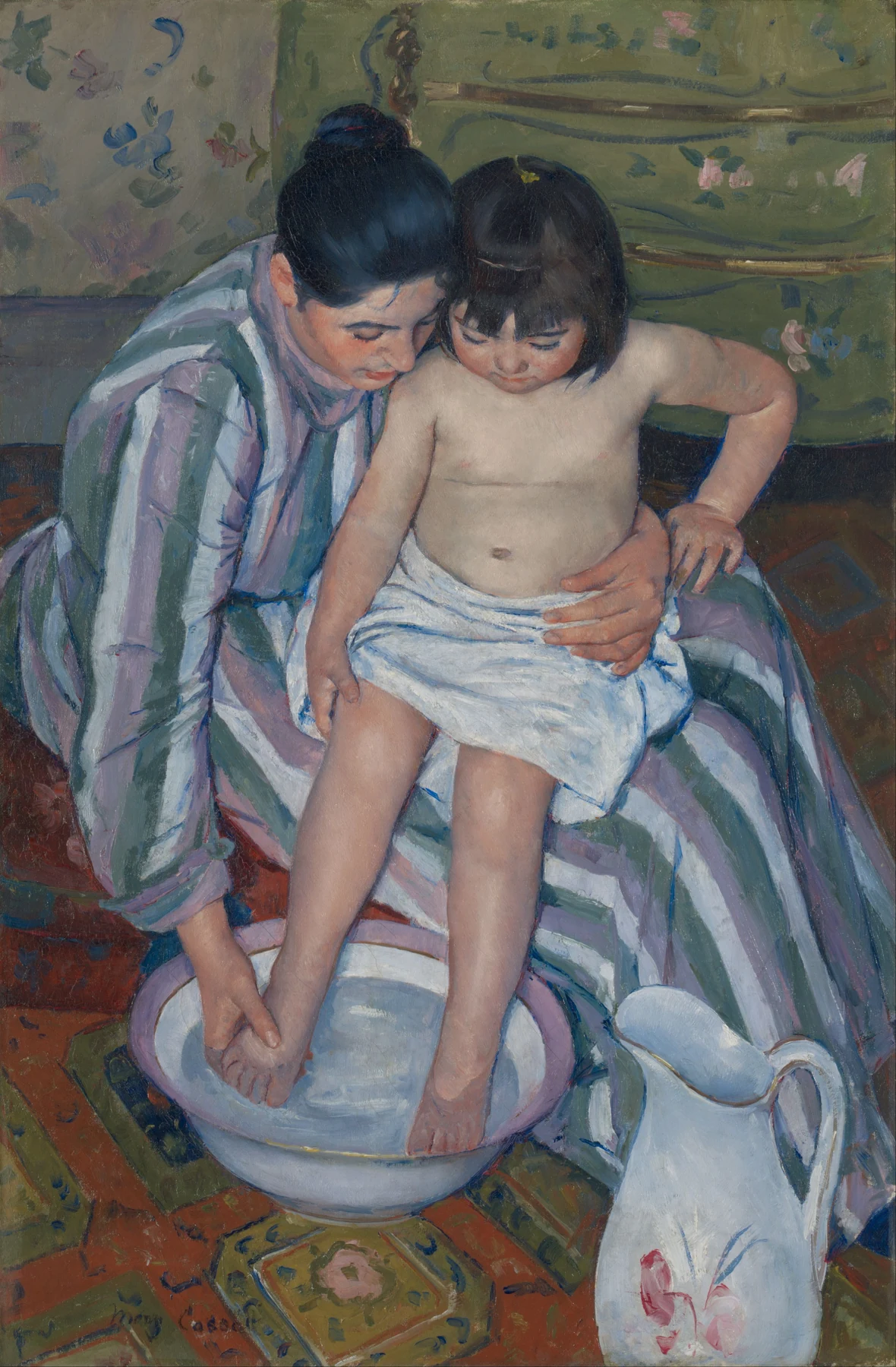
Learning how to appreciate art can start with seven small decisions in front of one picture. Take Mary Cassatt's The Child’s Bath at the Art Institute of Chicago as a companion for this exercise. A seated woman holds a child and washes a foot in a basin. You can use a reproduction or try the steps with a work you can see in person. If you want a definition to carry into the gallery, the guide to what art appreciation means explains how an observation grows into a judgment someone else can discuss.
Steps one and two give your eyes a place to begin
1. Spend a minute with the whole surface
Let the image fit within your field of vision. Cassatt places the basin low and the heads high, with a strong diagonal connection between them. Resist the impulse to enlarge a face straightaway. At a small scale, the two figures form a compact group encircled by patterned furnishings. A smaller detail will mean more once you remember which larger shape contained it. Name the place your eyes landed first and the place they visited second.
2. Say what the figures are doing
Choose an active verb and identify the body parts that make the action possible. One arm holds the child's waist while a hand guides a foot toward water. Weight, touch, and balance become visible through overlap. If you began by describing a mood, try describing the physical arrangement that led you there. Someone listening with their eyes closed should be able to position two figures and a basin on a sheet of paper.
Steps three and four examine the painter's choices
3. Follow a line across several objects
Look at the stripes on the woman's dress. Some bend around a knee or change direction as the fabric turns. Other patterns seem to rise straight toward the edge of the canvas. The contrast makes the body feel solid while the room feels relatively shallow. Follow a different route from the crown of one head across the other head and down the line of sight. Both figures attend to the washing. You have located a shared action without reading either expression.
4. Find where light separates touching things
Look where the child's pale leg meets the striped sleeve, then where the foot meets the light-colored basin. The first boundary is easy to follow across contrasting tones. The second asks you to pick out a change of contour. Cover the woman's guiding hand and see what becomes harder to understand about the foot's position. Reduce the image until the fingers disappear. Does the bathing action still read from the larger light shapes? The guide to reading a painting develops this test on a different pair of working hands.
Steps five and six bring in another voice
5. Read the title, date, and medium
The Child's Bath dates to 1893. Look up Cassatt's interest in Japanese prints and return to the high viewpoint, patterned surfaces, and cropped setting. These features give you something specific to investigate. They do not, by themselves, identify a single print as her source. If you are curious about different uses of pattern and format, compare Japanese paintings and printed images before making a claim about influence.
6. Invite a second description
Give a companion thirty seconds to name the feature that organizes the image for them. If they choose the basin and you chose the embracing arm, follow each route in turn. Ask what each choice makes easier to see. With a group at home, play Ten-Second Look and compare which areas people remember after a brief encounter. A difference in recall can reveal where a color, face, or strong edge caught one viewer's attention.
Step seven turns a visit into a memory
7. Take away one precise sentence
A good museum note fits on a small card. Try writing that Cassatt makes a familiar act feel absorbing by giving two figures a single direction of attention. Underline the observation that would allow someone to check your statement. Add a rough diagram if words feel awkward. Two circles and a diagonal may recall this painting more effectively than a list of colors. On your next visit, see whether the diagram brings the full arrangement back. The details and differences exercises provide new pictures for another attempt.
Frequently asked questions
Do I have to spend the same amount of time on each step?
Let the work decide. A repeated textile pattern may reward several minutes of tracing. An unexpected title can send you back to the first step almost immediately. Keep the sequence flexible enough to accommodate a discovery that occurs late in the visit.
What can I do when photography is restricted?
Draw a small arrangement of shapes and record the artist, title, and collection on the back. Include a detail that surprised you and its location relative to the frame. At home you can compare your recollection with the museum's reproduction and see which relationships survived the trip.
Revisit one boundary
Look again at the place where the child’s foot meets the basin. Cover the guiding hand. In one sentence, say which part of the bathing action you can still recognize.