Art Appreciation Course: What You'll Learn
What an art appreciation course covers, from visual analysis to art history, and how to choose one that fits your goals.
An art appreciation course can teach you to identify how a building carries weight, explain why a print circulated widely, or write a persuasive paragraph about a portrait. The title alone tells you very little about which of these skills receives the most attention. Start by deciding what you want to be able to do at the end of the term. The introduction to art appreciation as a practice gives examples of the observations and judgments that a course can help you develop.
- If you want to place objects in time, look for a chronological survey. Check whether a sample assignment asks for an annotated timeline or a comparison across periods.
- If you want to argue from what you see, look for a discussion seminar. Ask for a sample image response and its grading criteria.
- If you want to understand how an object was made, look for a materials course. Check whether you will examine a surface, follow a demonstration, or document a process yourself.
Learn four different things from one portrait
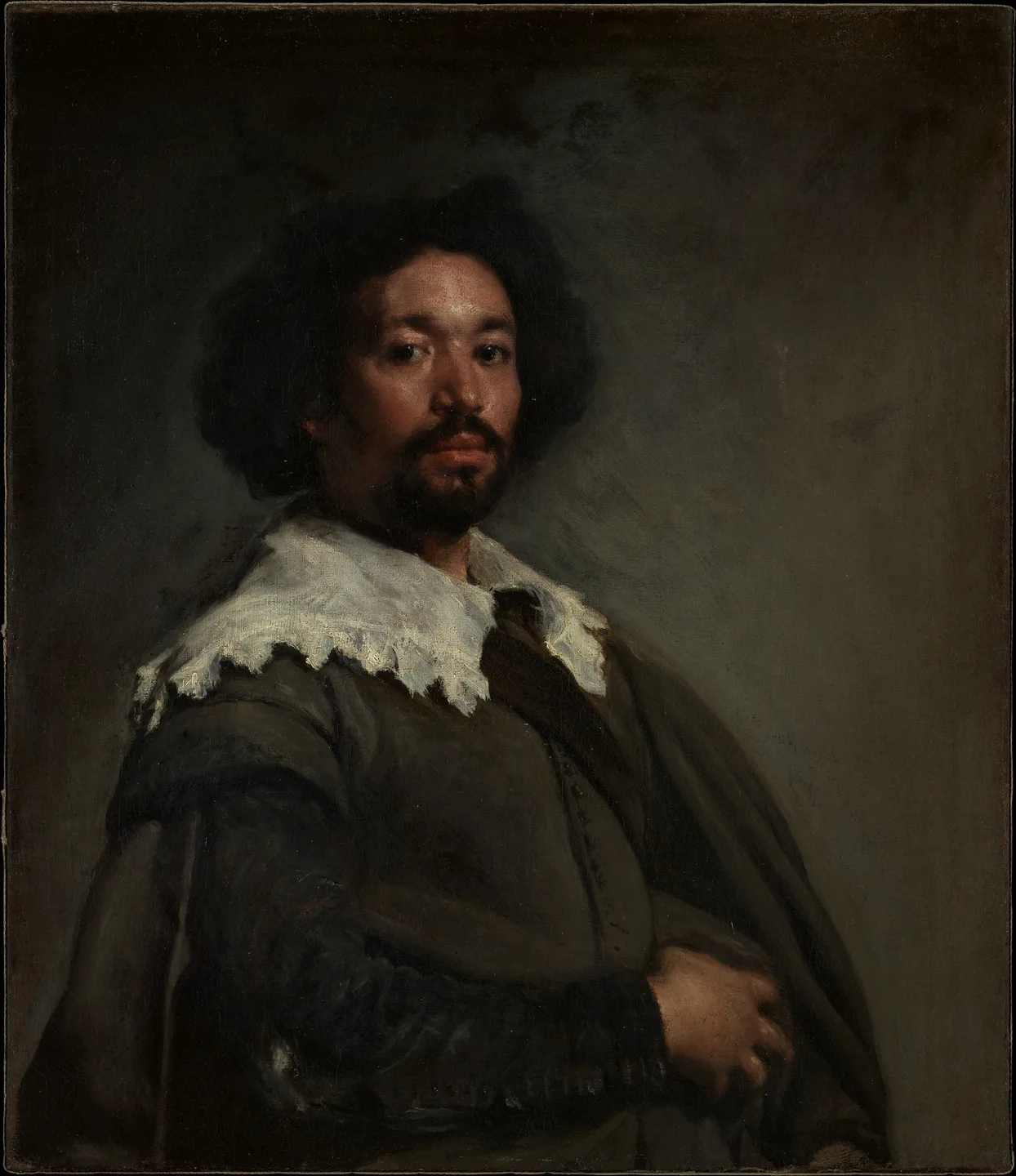
Try the distinction on Velázquez’s portrait of Juan de Pareja at The Met. For identification, record Diego Velázquez as the painter and Juan de Pareja as the sitter. For description, find the strip of white collar between the head and dark clothing. For contextual research, find out who Pareja was. The Met identifies him as a painter who was enslaved in Velázquez's workshop when this portrait was made. Now the fourth task, interpretation, has a real problem to work on. How does a subject's direct gaze sit alongside that documented relationship?
Each task produces a different piece of coursework. A flashcard can recover the two names. A sketch can locate the collar. A footnote can tell a reader where to verify the biographical fact. An essay can bring all three together without claiming the painting gives access to Pareja's thoughts. By the end of a course, you should be able to explain which part of a claim a person could check by looking and which part needs a historical source.
Choose an organizing principle that suits your question
A chronological survey traces changes across time. Dates acquire meaning because they connect works to materials, patrons, and political circumstances. A thematic course begins with a question such as how rulers make authority visible. Its examples may span distant centuries. You might compare a life-size sculpture, an official photograph, and a painted portrait. A material-based course might follow a clay vessel from raw material through firing, decoration, trade, and museum display.
Try each approach on a single object before enrolling. A painted Japanese screen can be placed on a timeline, examined as a room divider, or studied through its layers of paper, pigment, and gold. Which question keeps you looking? Someone preparing for a broad survey exam may value a timeline. A designer may want several weeks devoted to the material decisions concealed in everyday objects. For a preview of chronological material, examine the dates and overlapping practices in the art movements guide.
Learn to correct a claim that outruns its evidence
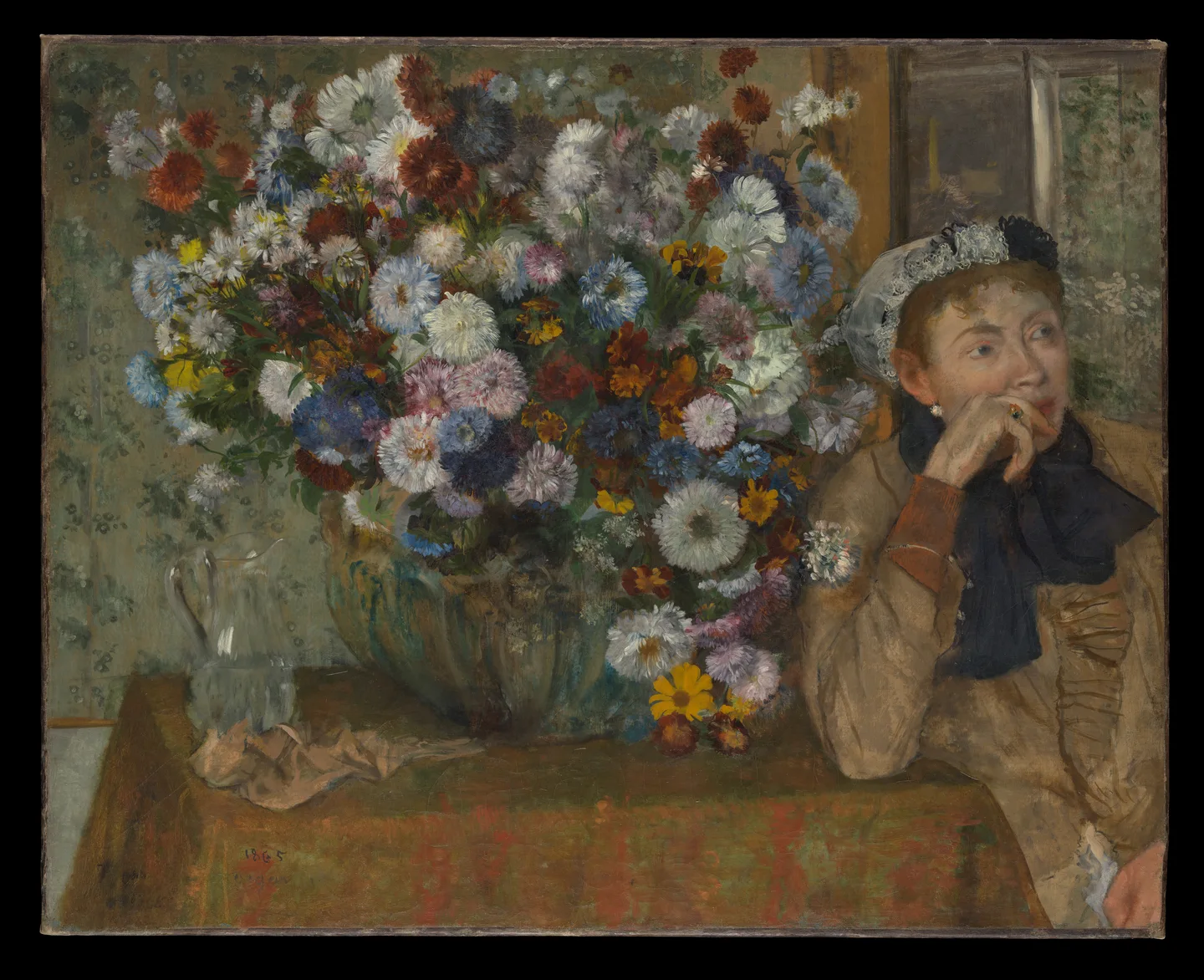
Consider a draft sentence about Degas's A Woman Seated beside a Vase of Flowers. “The sitter looks lonely because she is about to receive bad news.” You can locate the woman's face near the right edge, her hand beside her cheek, and a large bouquet occupying much of the middle. Nothing in those details establishes imminent bad news. Keep the spacing and gesture. A revision might read, “The bouquet gets the central position that I expected a portrait to give its sitter. Her gaze carries my eye farther to the right.”
A teacher could now ask which part of the bouquet redirects your eye toward the woman. A classmate could object that the sitter's hand holds their attention even before the flowers do. Both responses can be tested against the same image. That is a different skill from remembering that Degas painted the work. A classroom walk-through shows how a discussion can supply the evidence you need when a first draft uses a person's expression to invent a story. In the worked Art 100 assignment, you can see exactly where a description earns credit and where an interpretation needs further evidence.
Build a small portfolio you can assess yourself
Save an early paragraph, a later comparison, and a final reflection where course rules permit. Use the same three questions when reading each piece. Can you locate the detail described? Does the evidence support the claim? Can you tell which facts came from research? Changes in those answers document a kind of progress that a quiz score can miss. For object recognition, try Artwork Memory and note which detail distinguishes a particular work from visually similar examples.
Keep the early draft with the revision. Circle each word you had to withdraw and underline the specific observation you added. Words such as “lonely” might survive a revision, but now you can tell whether you are naming your experience of the composition or claiming to know what the sitter felt. That distinction transfers to a portrait in the details and differences guides even when the artist, sitter, and date are new to you.
Frequently asked questions
Will an online course work for learning about scale and materials?
Look for installation photographs, measured dimensions, and close views that reveal the surface. A course that asks you to compare a work with an object in your own surroundings can make scale tangible. Check how demonstrations and museum assignments are delivered before deciding whether the format fits your circumstances.
How can I tell whether a certificate carries academic credit?
Read the institution's enrollment and credit information and check the receiving institution's transfer rules if credit matters to you. A completion certificate may document participation or assessment. Its title alone does not tell you whether it applies toward a degree requirement or transfers into another program.
Read the syllabus for one deliverable
Find a real assignment that teaches the skill you want. Note its due date, how you will access the image, what the grader asks for, and whether you can revise after feedback.