Art History Quiz With Answers: Fix the Museum Labels
Find and correct eight mistakes in draft museum labels. Then check the explanations for the right work, date, or movement.
Eight draft museum labels contain one mistake each. Read the two sets before opening the corrections. For every label, copy the disputed phrase and write the evidence you would need to change it. The descriptions include the visual clues, so you can make your edits before checking the museum records. For a quiz about naming an image from its construction, try the visual identification questions. Here the editor has to decide what a visitor can reasonably learn from the words on the wall.
Four labels that misread the object record
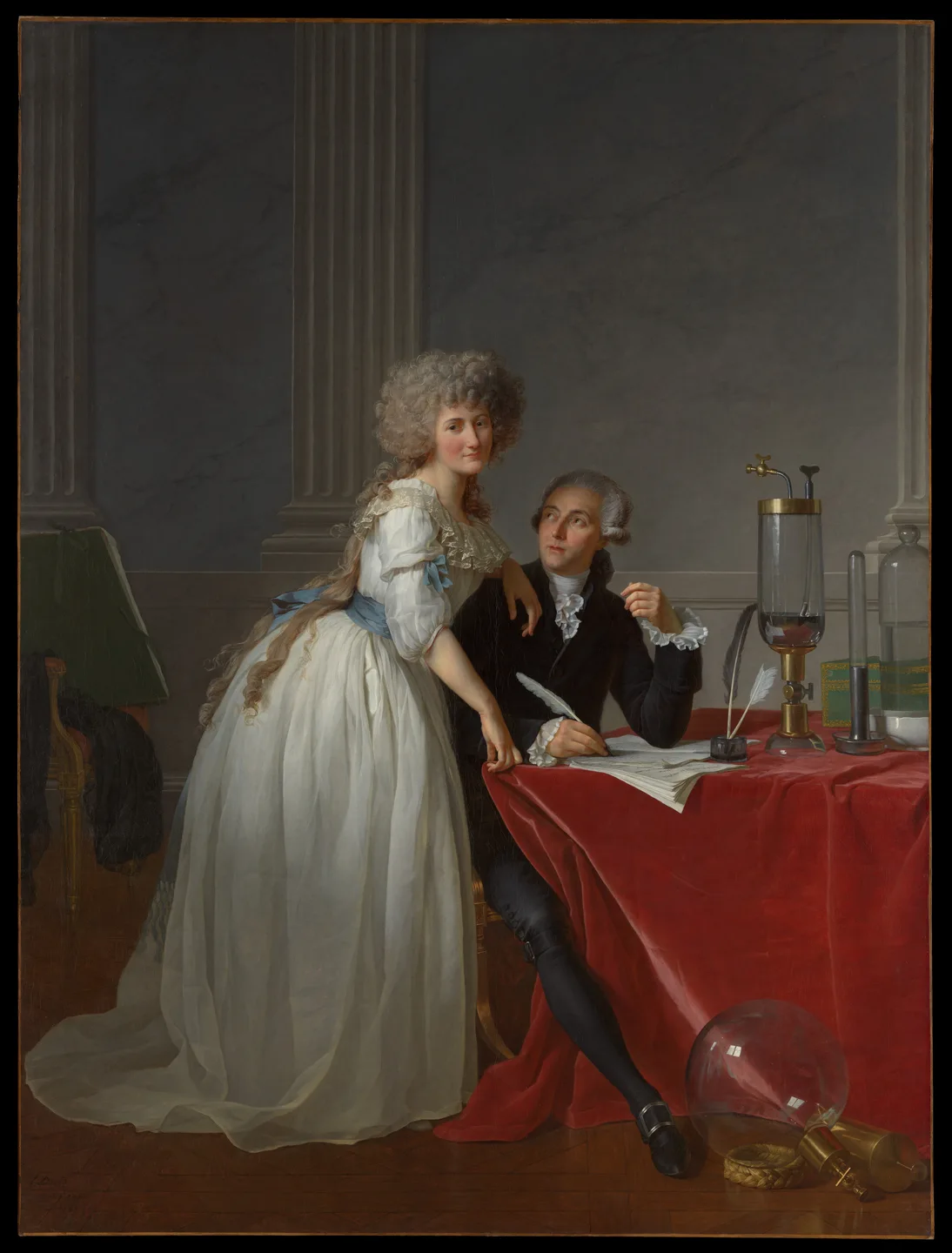
- “Antoine Laurent Lavoisier painted this portrait of himself at work alongside his wife Marie Anne.” The seated chemist has a pen beside his papers. Whose name belongs in the maker field, and what role does the pen establish for the man pictured?
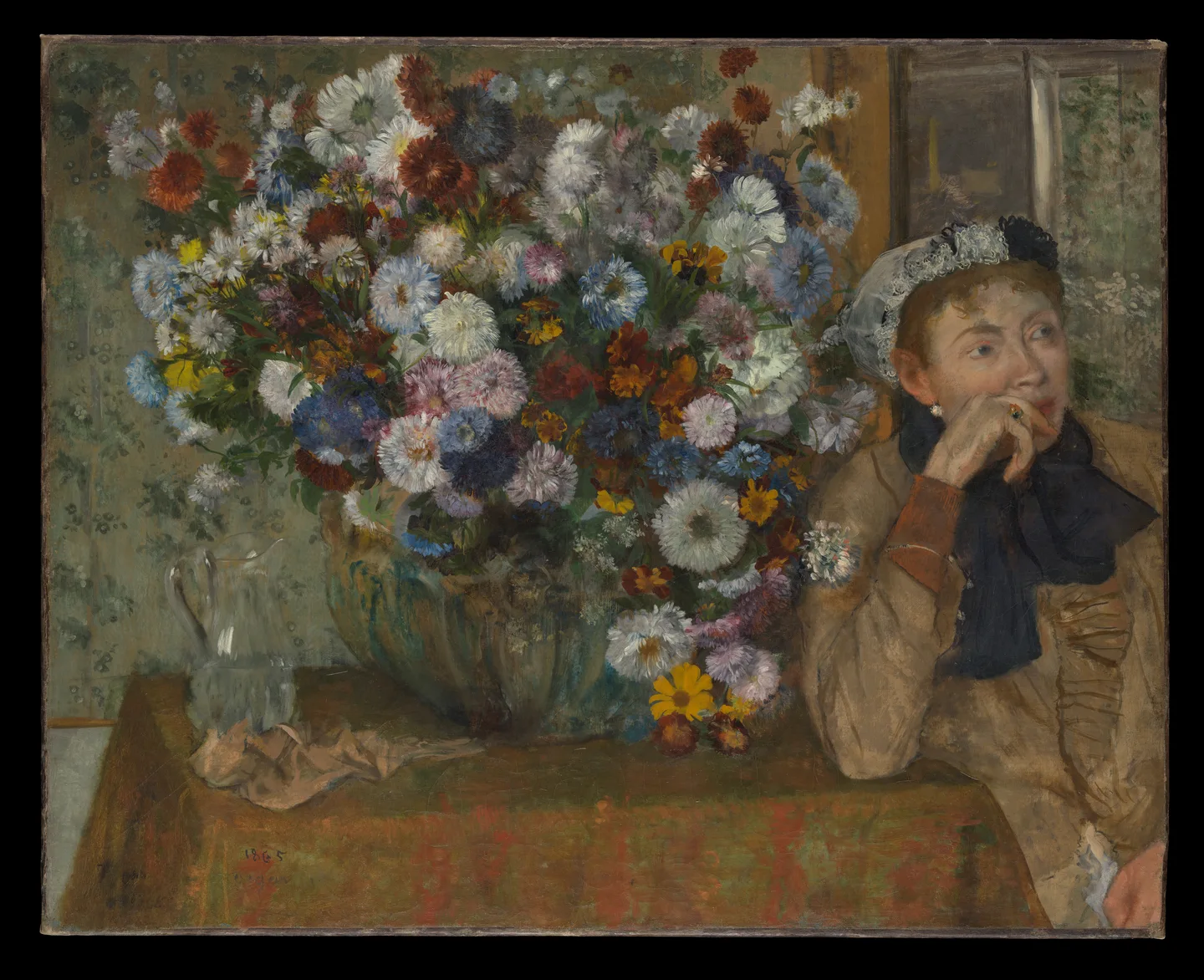
- “The museum identifies Degas's sitter as Madame Paul Valpinçon beyond doubt.” The draft transcribes a catalog title that puts her name in parentheses followed by a question mark. What would you change in the label? How could you identify the painting to a visitor even if the sitter's identity changed tomorrow?
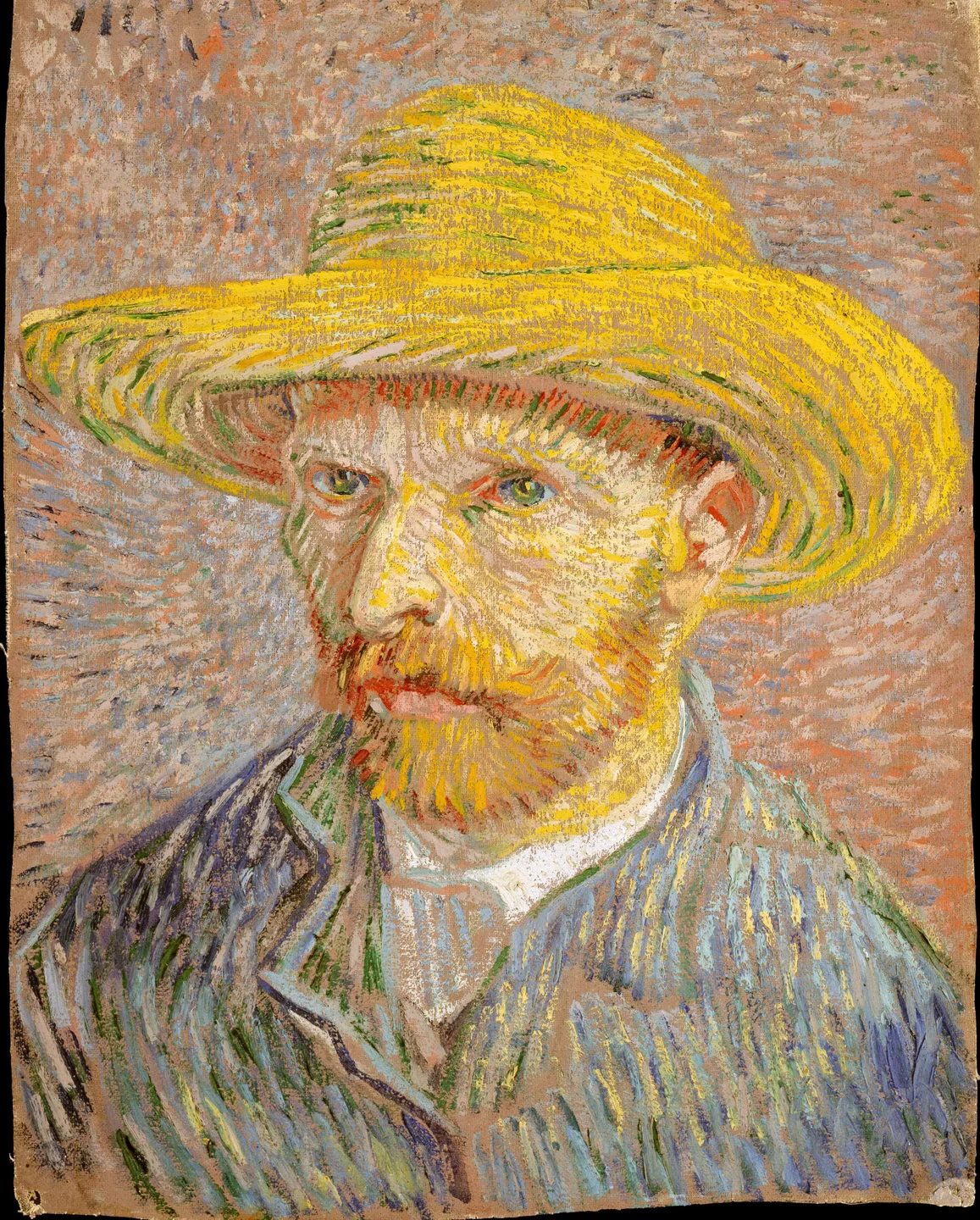
- “Two different Van Gogh paintings listed together must occupy two separate pieces of canvas.” Look at the catalog title that brings together Self-Portrait with a Straw Hat and The Potato Peeler. What physical possibility does the label writer overlook, and why might a gallery visitor see only one image?
- “In Holbein's The Ambassadors the men stand beside a realistically drawn skull that can be seen clearly from straight ahead.” Where would you send the visitor to find that skull? Name the term for extending or deforming an image so that it resolves from an unusual viewpoint.
Four labels that get the movement wrong
- “Édouard Manet and Berthe Morisot both showed paintings in the first independent Impressionist exhibition in Paris in 1874.” Keep the name of the exhibitor. Which artist's close connections with the group could have led the writer to make this mistake?
- “The many feet and tails in Giacomo Balla's Dynamism of a Dog on a Leash show several different dogs passing a stationary viewer.” Name the movement associated with the work and explain what the repeated outlines describe. How would your reading change if you counted the legs as anatomical facts?
- “Seurat exhibited A Sunday on La Grande Jatte at the Impressionists' first show in 1874. His technique is usually called Post-Impressionism.” Move the painting to the correct exhibition and choose a more precise name for the color practice that he and Paul Signac developed. What is the broader label good for?
- “Any museum displaying Duchamp's Fountain is exhibiting the ordinary object submitted to an exhibition in 1917.” Distinguish the original Dada-era submission from a later version. Which two dates would you consult before describing the object in front of you?
Corrections to the object labels
- Jacques-Louis David painted the Lavoisiers. The Met’s portrait record identifies David as the artist. Antoine sits with the pen beside papers and scientific instruments. Marie Anne, who contributed drawings to scientific publications, stands beside him. Three people here have different relationships to image making. Only David painted this canvas. A person's prominence in the title identifies a subject and does not by itself confer authorship.
- Write “possibly Madame Paul Valpinçon.” The Met’s title for the woman beside the vase preserves the catalog’s degree of confidence. You can point to the enormous vase of flowers beside the seated woman, which accounts for much of the painting even if no sitter is named. Calling the work by its descriptive title preserves that evidence while allowing the identification to remain open.
- One support can carry paint on both sides. The Met’s two-sided Van Gogh canvas carries a self-portrait on the reverse of an earlier study of a peasant peeling potatoes. A conventional frame against a wall hides one surface. The guide to Van Gogh's paintings separates changes in subject, support, and chronology. Here two stages of his career occupy opposite faces of one object.
- Look from the side. Seen head on, an elongated form lies across the lower foreground. Viewed obliquely, it resolves into a skull. The National Gallery’s record for The Ambassadors describes where to stand. The technique is called anamorphosis. The two positions do different jobs. From one you survey the portraits and instruments. From the other, the skull becomes clear and the rest of the picture is difficult to examine.
Corrections to the movement labels
- Keep Morisot. She exhibited The Cradle, documented by the Musée d’Orsay, in 1874. Manet knew and influenced painters in the circle, but he did not participate in their eight independent exhibitions. A group photograph, personal friendship, or visual resemblance would each establish something quite different from a catalog listing an artist's submission to an exhibition.
- Italian Futurism. Balla repeats the passing positions of the little dog's legs and tail, the leash, and the walker's feet. The viewer reads a succession of instants within one street-level view. Count the bodies, then the outlines of feet in Buffalo AKG’s painting.
- The eighth exhibition, in 1886. The Art Institute of Chicago’s record for La Grande Jatte dates its first exhibition to 1886. Divisionism describes the separation of colors into adjacent touches. Pointillism more narrowly describes the use of dots. Neo-Impressionism names the movement associated with Seurat and Signac. Post-Impressionism later supplied a broader historical category. For full credit, distinguish when the painting was shown from how its colors were applied.
- The first Fountain was lost. A photograph by Alfred Stieglitz records it. Tate’s Fountain is cataloged as a 1964 replica of the work from 1917. Those dates tell a visitor which object stands in front of them. Comparing the two is a good use of the time and memory exercises. Try the chronology questions in the art history quiz with two dates on your answer sheet whenever a later cast or impression is involved.
Frequently asked questions
How should I record a plausible but incorrect answer?
Keep the bad caption beside your correction until you can name the evidence that changed your mind. “Manet was close to the exhibitors” is a statement about a social circle. “Morisot sent The Cradle in 1874” can be tested against the record of a particular exhibition. Try the same distinction between a plausible association and a documented relationship in the revision quiz about objects and materials.
What goes on the label when the artist is known but the sitter is uncertain?
Give the securely recorded artist in the maker field. Keep the collection’s qualifier beside the proposed sitter’s name, or use a descriptive title. You can still name the maker, describe the flowers, and locate the woman's face in the Degas painting. The one uncertainty about the sitter need not spread to those independent observations.
Sign off one corrected label
Choose a label you missed and circle the field that went wrong: maker, sitter, date, medium, movement, or version. Copy the supporting phrase from the collection record. Carry any question mark or qualifier into your final wording.