Guess the Painting: How to Play
Guess the painting: learn the rules, see worked examples, and get tips for reading titles, subjects, and details faster.
To guess the painting, start by figuring out what kind of information the answer choices require. A title can name a person, an action, a place, a time of day, or a story that the image alone only partly explains. The beginner's guide to reading a painting helps you separate a visible clue from a fact learned elsewhere. In a title game, that separation keeps a plausible guess about a scene from turning into a confident guess about its exact catalog wording.
What happens in a round
In Name That Painting you look at a work and choose its title from three options. The current game deals five questions per session. Read the full titles before committing. Two choices may identify the correct broad subject, leaving one small distinction to decide the answer. An outdoor meal and an indoor meal share figures, clothing, and food. The shape of a doorway, a tree trunk, or a horizon can become more valuable than the most prominent person.
After the reveal, compare the correct title with the part of the picture that helped you. Some titles come from long-standing naming conventions, translations, or catalog decisions. Your first guess might describe the image well while missing the accepted wording. Keep those cases apart from guesses based on a feature you misremembered. At the end of the session, pick one distinction you could apply again. Remembering a title becomes easier when it belongs to an arrangement you can reconstruct.
Two practice titles to choose
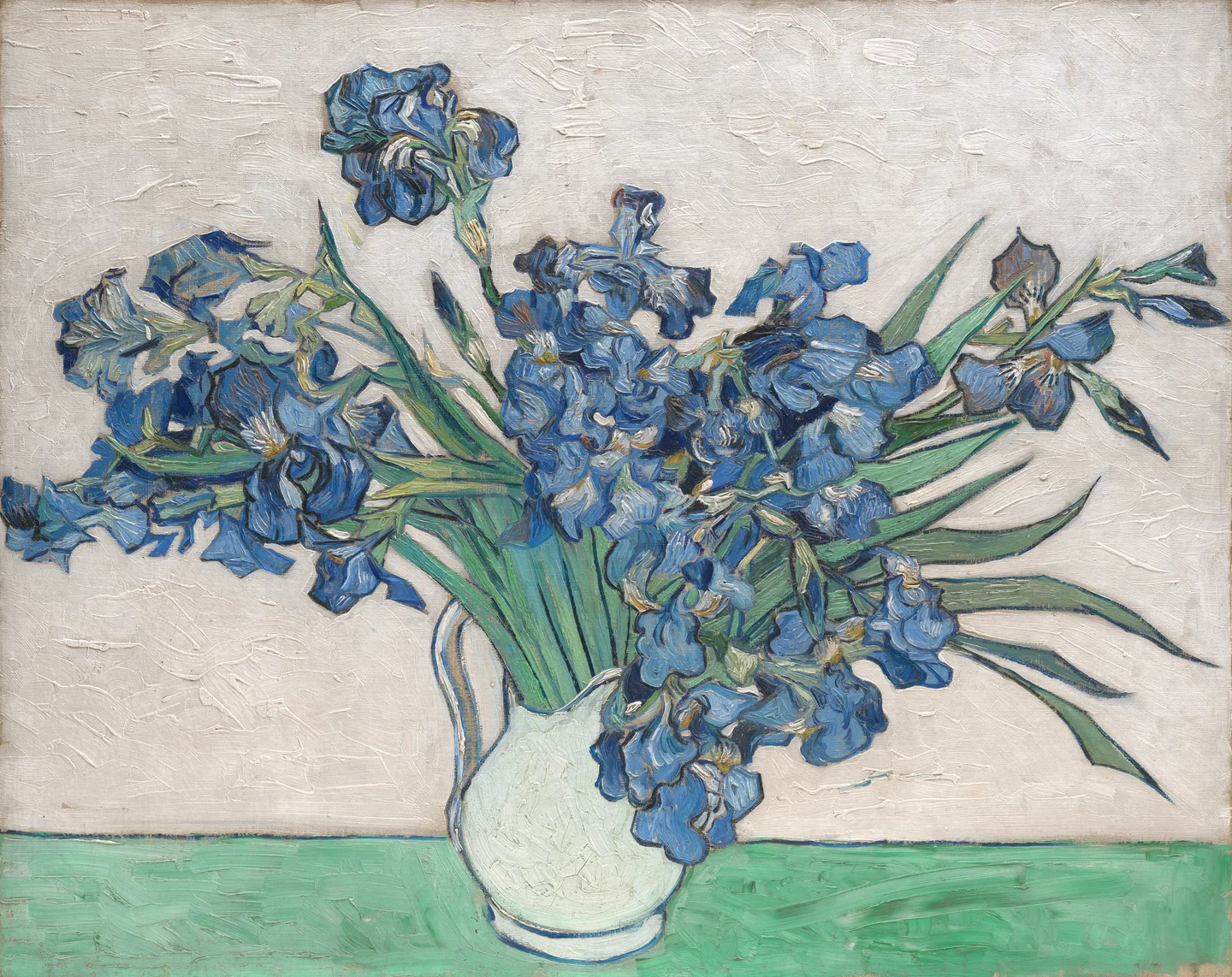
Flower practice. A vase holds purple-blue flowers and long, narrow leaves. Choose among Roses, Oleanders, and Irises. A vase of flowers fits every one. Find a blossom large enough to see the way its petals bend. Some petals rise and others droop. Look below the heads for long, blade-like leaves. Write down one petal clue and one leaf clue. Keep the three titles on your card for the correction.
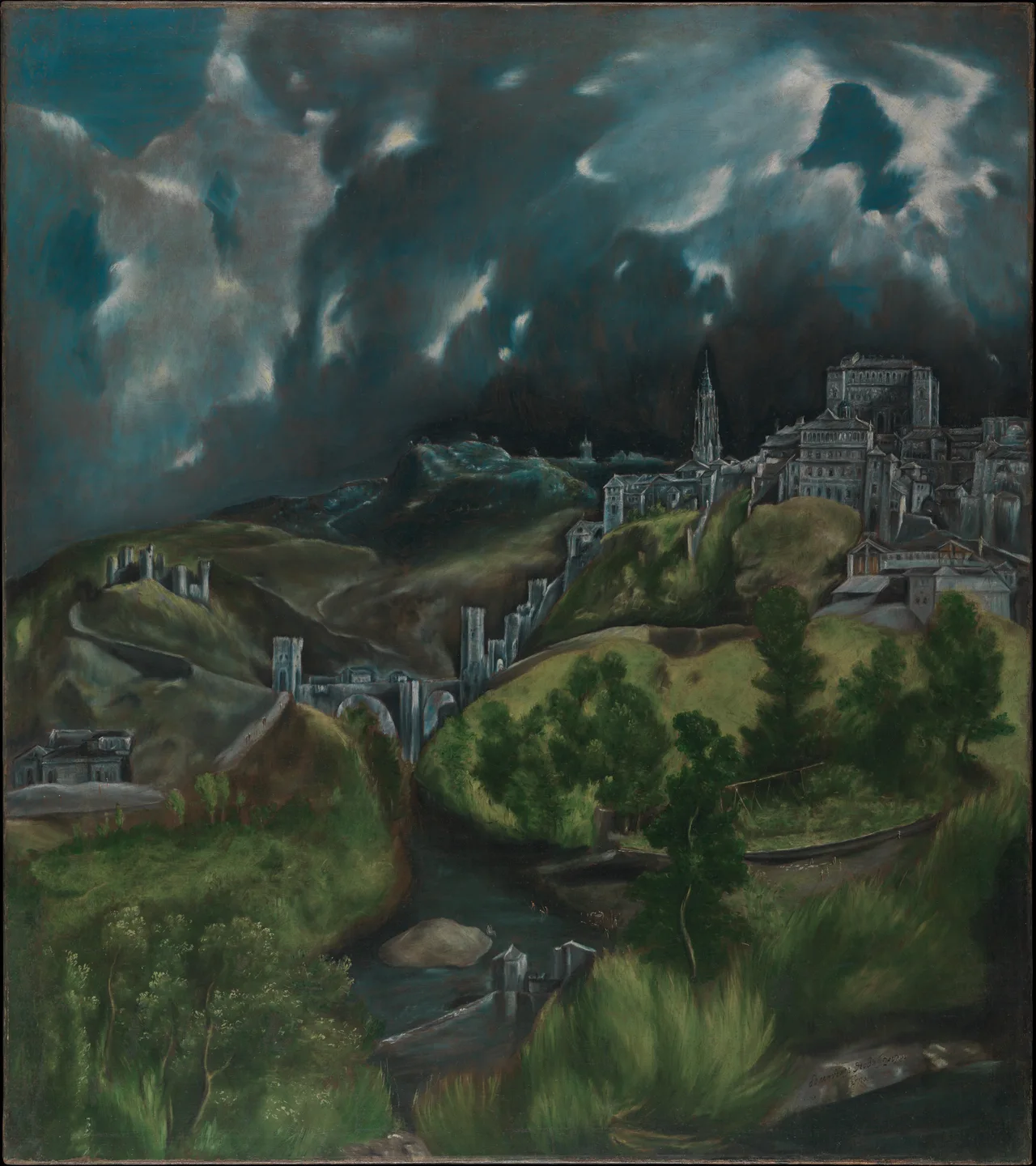
Place practice. Choose among View of Seville, View of Madrid, and View of Toledo. In El Greco’s painting, a river cuts below a built-up ridge. Look for a bridge and a cathedral tower near the Alcázar. If the green slope and storm clouds are all you remember, note which architectural detail would help you recover the city’s name.
Check the flower title against the leaves
The painting is Van Gogh’s Irises. A general word such as “bouquet” gives useful orientation but does little to distinguish these three titles.
Suppose you picked Roses because one crowded head looked round in the thumbnail. Zoom in until you can distinguish petals folded over one another from the drooping outer parts of an iris. Now look back at the foliage. The same identification is supported by two quite different features. On a study card you can draw one of each in less space than it takes to write a paragraph about Van Gogh's career. A painter's name will not rescue you in a set where the same person painted all three kinds of flowers.
Check the city title against the skyline
The answer is El Greco’s View of Toledo. The hill and the weather support a landscape identification. The silhouettes of particular buildings help you narrow that to a place. He rearranged the city's topography, so using a modern street map as if the painting were a photograph could confuse a careful guesser.
Try a second route to the same title. Cover the silhouettes of the buildings and describe what remains. It is a plausible Spanish landscape. Uncover those silhouettes and ask which detail could jog the memory of a viewer who had previously encountered this particular picture. That is a learned recognition, and it is fine to record it as such. The guide to famous landscape paintings has further examples where spatial organization can identify a work more securely than the weather can.
Work backward from a wrong answer
Start with the title you selected and ask what the image would need to show for it to become a better answer. If you chose a morning harbor for a night landscape, look for a source of illumination and reflections that describe the hour. If you chose a formal portrait for a domestic scene, ask whether the props identify someone's office or show someone absorbed in an activity. Turn that correction into a one-line clue for a friend.
Be cautious about inferring the maker from a familiar subject. Many artists painted gardens, boats, or seated children. The guess the painter quiz concentrates on the different evidence needed to identify an artist. In a title game, repeated colors and brushwork can narrow the field, but the answer is often decided by a verb or place name. The time and memory collection groups further exercises around recognizing those pictured actions and objects.
Frequently asked questions
What if two museums translate a title differently?
Learn the wording attached to the particular object and keep recognized alternatives in your notes. A translation may change articles or word order while identifying the same work. Similar titles can also refer to genuinely different versions, so check the artist, date, dimensions, and collection.
Is identifying the subject enough to win?
It can eliminate choices, especially when their subjects differ widely. A set with three portraits or three landscapes usually demands another clue. Try locating one distinctive action, accessory, or spatial relationship before choosing, and use the reveal to connect that observation with the recorded title.
Test your next title
Before choosing, name one visible detail that favors your title over its closest rival. After the reveal, record whether the missed clue was a flower shape, a building, or a catalog name you still need to learn.
Play Name That Painting