Frida Kahlo's Most Famous Painting
Frida Kahlo's most famous painting: The Two Fridas, self-portraits, and the symbols that make her work unforgettable.
Frida Kahlo's most famous painting is often identified as The Two Fridas, her large double self-portrait of 1939. Other audiences may recognize a different self-portrait first. The guide to famous paintings explores how a single detail can acquire a life in reproduction. In The Two Fridas, it is worth resisting the temptation to isolate the two familiar faces. The picture builds its meaning through the distance between the bodies and the several ways Kahlo visibly joins them across that interval.
Begin with the bench and the hands
Two nearly life-size figures sit on the same bench under a clouded sky. Their heads occupy roughly the same height. Their knees approach one another across the middle, and one hand reaches to hold the other's. The scene gives a viewer the frontal encounter of a formal portrait, doubled. Start with the low horizontal of the bench and work upward. A structure that could easily divide into two separate portraits keeps coming together near the middle of the canvas.
Look at the space between the held hands and the faces. A connecting vessel crosses the space between the figures, bringing their exposed hearts into relation. This second connection is precarious in a way the clasped hands need not be. The eye can follow its route and still return to the calm grip immediately below it. Try describing each connection with a different verb. One part of the image links, one supports, and another appears to threaten both figures with loss.
Clothing creates two publicly visible selves
The figure on the viewer's left wears a voluminous white dress with elaborate lace, while the figure on the right wears clothes associated with Tehuana dress. Compare the sharply different areas of light and color the two outfits create. The expansive white skirt makes the marks of blood strikingly visible. The darker garment organizes the other body quite differently. Their faces resemble each other closely enough to insist on shared identity even as the clothing makes distinction immediate.
The V&A’s exhibition Frida Kahlo: Making Her Self Up brought together clothing and personal objects from her home. Tehuana clothing had particular associations with the Isthmus of Tehuantepec and acquired meanings related to Mexican identity and postrevolutionary politics. A museum's historical account can help you separate those associations from a viewer's guess about a particular fabric. Describe what the clothes do on the canvas before using either outfit as a complete explanation of the person wearing it. Clothing can signify belonging, performance, desire, history, and pain simultaneously. Compare the handkerchief in Picasso’s Weeping Woman with the surgical instrument in The Two Fridas. What does each artist let the hands tell you before you look at the face?
Make the biographical evidence specific
The Museo de Arte Moderno’s account identifies the double portrait as a work of 1939, the year Kahlo divorced Diego Rivera. The National Museum of Women in the Arts biography documents their divorce and subsequent remarriage. One figure holds a tiny portrait associated with Rivera, and the other holds a surgical instrument against a blood vessel. Those details make a reading concerned with attachment, loss, and bodily experience possible. A divorce date is relevant evidence. It does not exhaust the painting's questions about dress, identity, and Mexico, or explain on its own why Kahlo gave both bodies a direct, composed gaze.
The painting's scale also changes such a reading. Many of Kahlo's self-portraits invite the viewer close to a smaller surface. The Two Fridas, now in Mexico City's Museo de Arte Moderno, confronts its audience with two large seated presences. On a phone, both paintings might appear the same size. Mark the approximate width of The Two Fridas, about 1.7 meters, against a wall and imagine where the two heads would sit in relation to your body.
Compare three ways of presenting a self
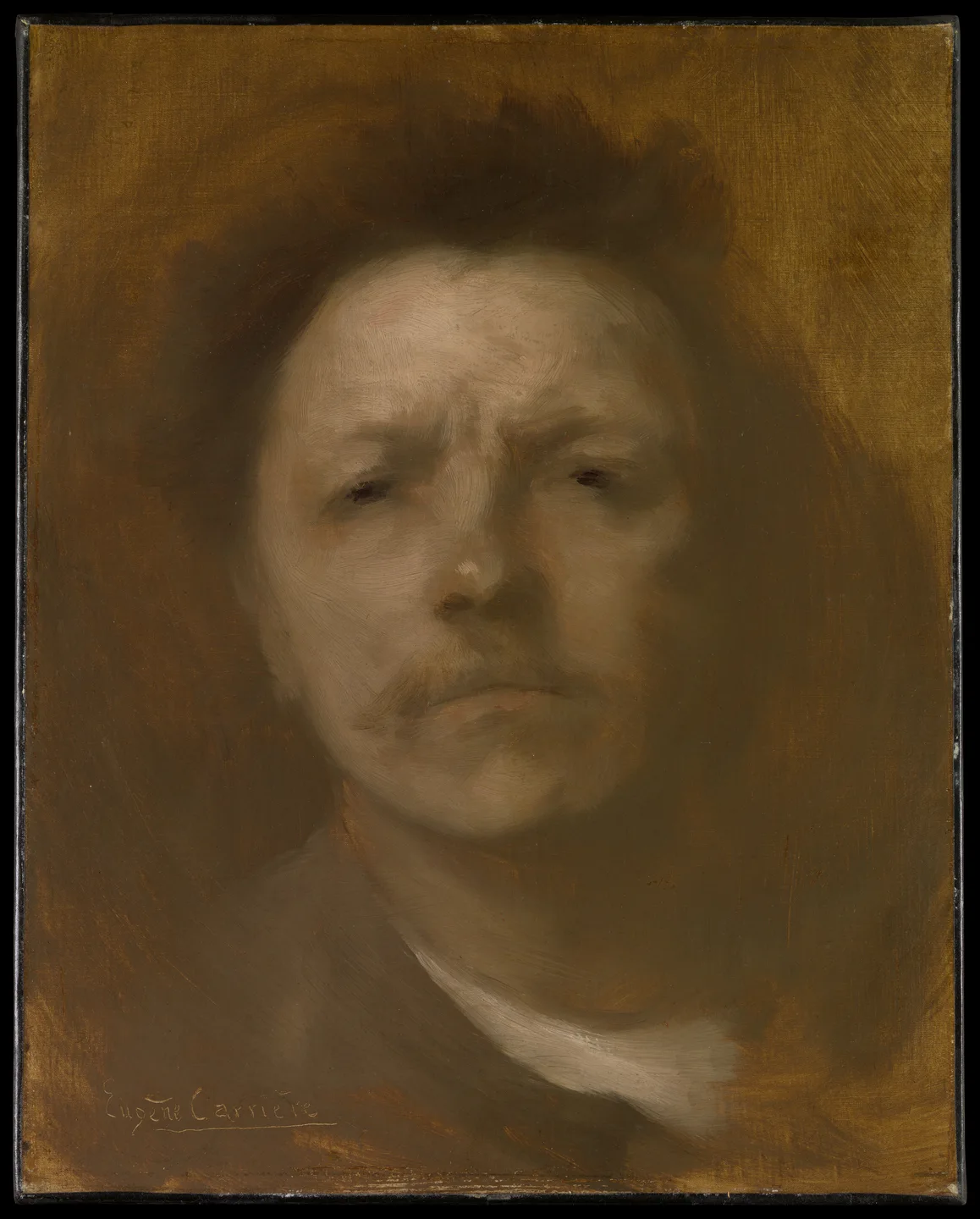
In Self-Portrait with Cropped Hair, scissors and loose strands tell us about an action that occurred before the moment depicted. In Self-Portrait with Thorn Necklace and Hummingbird, vegetation, animals, and a piercing necklace crowd the face. The Two Fridas distributes signs of bodily vulnerability across two figures and a larger open space. Compare where each painting puts hands. They can perform an action, hold a connection, or disappear from the frame while a face absorbs the viewer's attention. Compare Eugène Carrière’s Self-Portrait, where a softly outlined face emerges from shadow. Which clues to the sitter would survive if you hid Kahlo’s clothes or Carrière’s face?
For another portrait exercise, play Who's in the Painting? and distinguish the person's identity from the visible evidence that identifies them. The guess the painter quiz takes up the separate question of authorship. If the clothing or flowers around a figure draw your attention, consider how botanical detail works in famous flower paintings and in other works in the famous paintings topic.
Frequently asked questions
Are the two people sisters or twins?
Both figures represent Kahlo. Their closely related faces and position on a shared bench invite comparison, while their different dress and treatment of the exposed hearts establish distinctions within the doubled self-portrait. Holding hands lets the two bodies also appear as companions.
Does every animal or flower in a Kahlo portrait have a single meaning?
An animal or plant can belong to the artist's surroundings, evoke a cultural association, and serve a compositional purpose at once. Identify the actual species where possible, check the work's date and setting, and examine what the particular form does next to the face or body before settling on an interpretation.
Look at what the hands hold
Compare the clasped hands in The Two Fridas with the scissors in Self-Portrait with Cropped Hair. What can you say about the action before you consult a biography?